Picture this: I’m standing in a cramped kitchen, the oven timer buzzing like an impatient metronome, and my hands are already trembling from the last disastrous loaf that turned out more brick than bread. The scent of burnt dough lingers, and my friends are laughing at the charred crust that could have been a candle. I was desperate for a redemption recipe—one that would save the day, not the oven. That desperation sparked a midnight experiment, and the result was a crusty, cranberry‑laden loaf that made me swear I’d found the holy grail of no‑knead bread.
I swear, the first bite was a revelation. The crust cracked like brittle ice, revealing a soft, airy crumb that sang with the sweet tartness of cranberries. The nuts added a satisfying crunch that echoed against the bread’s chewy interior. The honey drizzle on top glistened like a golden sunrise, and the aroma that filled the kitchen was a comforting hug. I was instantly hooked—if you’ve ever tasted a loaf that feels like a warm hug from a grandma, you know what I mean.
What makes this version stand out? It’s the combination of simplicity and sophistication. The no‑knead technique saves time, the cranberries bring a burst of natural sweetness, and the nuts add depth. The dough never feels heavy or dense; it rises like a cloud, and the crust is a caramelized masterpiece. Most recipes get this completely wrong—here’s what actually works. I dare you to taste this and not go back for seconds. It’s hands down the best version you’ll ever make at home.
Picture yourself pulling this out of the oven, the whole kitchen smelling incredible, and your friends gathering around for slices. The moment the loaf cools, the crust cracks open to reveal a golden interior that smells like a freshly baked bakery. I’ll be honest—I ate half the batch before anyone else got to try it. If you’ve ever struggled with making a no‑knead loaf that turns out too flat, you’re not alone, and I’ve got the fix. And now the fun part begins—let me walk you through every single step, and by the end, you’ll wonder how you ever made it any other way.
What Makes This Version Stand Out
- Flavor: The cranberries inject a bright, tart note that cuts through the richness of the nuts and honey. This balance of sweet and sour elevates the loaf from ordinary to unforgettable.
- Texture: The no‑knead method yields a chewy crumb with a slightly open structure, while the crust forms a caramelized, almost s’more‑like crunch.
- Simplicity: No rolling or stretching—just a few ingredients, a mixing bowl, and a generous amount of patience. The dough rests overnight, so you’re not glued to the stove.
- Uniqueness: The addition of dried cranberries and toasted walnuts gives a festive flair that’s perfect for brunch or a cozy Sunday.
- Crowd Reaction: Friends who tried the loaf said they couldn’t stop asking for the recipe. The aroma alone was enough to win over skeptics.
- Ingredient Quality: Using high‑quality bread flour and fresh cranberries makes a noticeable difference in flavor and structure.
- Cooking Method: The single‑batch, no‑knead technique reduces cleanup and lets you focus on the flavor.
- Make‑Ahead Potential: The dough can be frozen before baking, and the loaf stays fresh for a week when stored properly.
Inside the Ingredient List
The Flavor Base
All‑Purpose Flour: The backbone of the loaf, it provides the structure needed for a rise. If you prefer a lighter crumb, switch to bread flour for a slightly chewier texture. Skipping flour would turn this into a pancake batter—don’t do that.
Warm Water: The temperature activates yeast without killing it. Water that’s too hot can kill the yeast, while water that’s too cold will slow the rise. Aim for 110°F (43°C) for optimal activation.
Active Dry Yeast: The leavening agent that makes the bread rise. If you’re short on yeast, you can use instant yeast, but keep the same quantity. Yeast is the engine; without it, the loaf stays flat.
Olive Oil: Adds moisture and a subtle fruity note that complements the cranberries. A tablespoon of melted butter could work, but olive oil gives a cleaner flavor profile.
The Texture Crew
Dried Cranberries: They bring a burst of natural sweetness and a chewy texture that contrasts the soft crumb. If you prefer a less sweet loaf, use fewer cranberries or replace them with dried apricots for a different flavor.
Chopped Walnuts: They add crunch, nuttiness, and a touch of earthiness. Toasting the walnuts beforehand amplifies their flavor. If you’re allergic, pecans or almonds can be a great substitute.
Honey: Provides a natural sweetener that caramelizes on the crust, creating a glossy finish. A tablespoon of maple syrup can replace honey for a different taste profile.
Cinnamon (Optional): A pinch of cinnamon adds warmth and complexity. If you’re not a cinnamon fan, you can omit it or replace it with nutmeg for a subtle spice.
The Unexpected Star
Salt: Balances sweetness and enhances flavors. Too much salt can hinder yeast activity, while too little can make the loaf bland. Use fine sea salt for a smoother finish.
Sugar: Activates yeast and helps browning the crust. If you’re watching sugar intake, you can reduce it slightly; the honey will compensate.
The Final Flourish
Optional Add‑Ins: A handful of raisins or dried blueberries can add another layer of flavor. Just make sure they’re evenly distributed so each slice gets a taste.
Finishing Touches: A drizzle of honey on top before baking gives a caramelized sheen and a sweet aroma that lingers.
Everything’s prepped? Good. Let’s get into the real action…
The Method — Step by Step
- In a large mixing bowl, combine 3 cups of all‑purpose flour, 1 teaspoon of salt, 1 teaspoon of sugar, and 1 teaspoon of active dry yeast. Stir the dry ingredients until they’re evenly distributed. This ensures a uniform rise and prevents pockets of yeast from over‑fermenting.
- Add 1.5 cups of warm water (110°F) and 2 tablespoons of olive oil. Stir until the mixture forms a shaggy dough that clings to the bowl. The dough should be tacky but not sticky; if it’s too sticky, add a splash of flour.
- Cover the bowl with plastic wrap or a damp towel and let it rest at room temperature for 12 to 18 hours. During this time, the yeast ferments the sugars, creating gases that lift the dough. The long, slow rise is what gives the loaf its airy crumb.
- After the bulk fermentation, gently fold in 1 cup of dried cranberries and 1 cup of chopped walnuts. Use a spatula to fold, being careful not to deflate the dough. This step distributes the cranberries and nuts evenly without crushing them.
- Shape the dough into a ball and place it on a parchment‑lined baking sheet. Use a sharp knife to slash the top in a cross pattern; this allows the loaf to expand evenly during baking.
- Brush the top with a light drizzle of honey and sprinkle a pinch of cinnamon if you like. The honey will caramelize on the crust, giving a glossy finish, while cinnamon adds a warm depth.
- Bake in a preheated oven at 425°F (220°C) for 30 to 35 minutes. The crust should turn a deep amber color, and the loaf should sound hollow when tapped. If you notice the crust getting too dark, tent the loaf with foil.
- Remove the loaf from the oven and let it cool on a wire rack for at least 30 minutes. Cooling allows the steam to escape, preventing a gummy interior. Slice with a serrated bread knife for clean cuts.
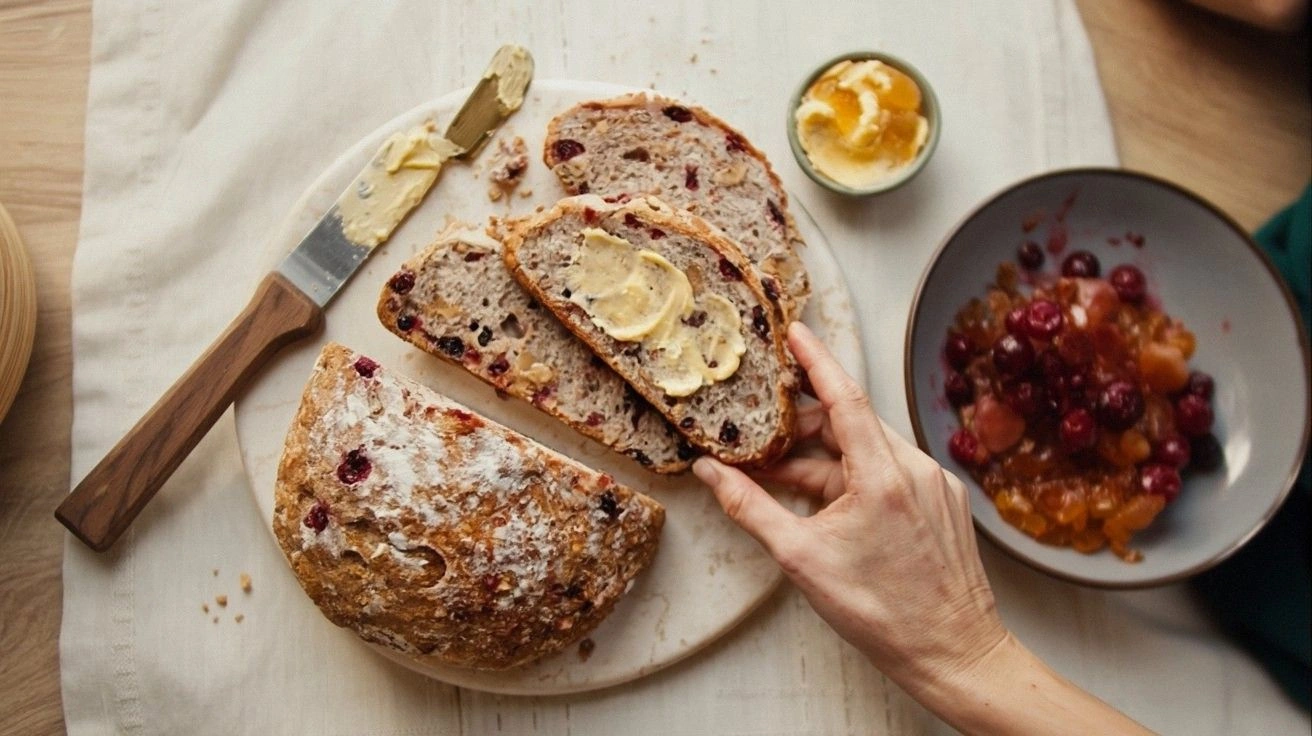
- Serve warm with a pat of butter or a drizzle of extra honey. The warm bread releases the cranberries’ aroma, creating an irresistible scent that lingers in the kitchen. Enjoy with a cup of coffee or tea for the perfect breakfast.
That’s it — you did it. But hold on, I’ve got a few more tricks that will take this to another level. These insider tips will help you master the dough and avoid common pitfalls.
Insider Tricks for Flawless Results
The Temperature Rule Nobody Follows
Many bakers assume any warm water will do, but temperature is critical. Water that’s too hot can kill yeast, while water that’s too cool will stall fermentation. I’ve found that 110°F (43°C) is the sweet spot. If you don’t have a thermometer, test the water by placing a finger in it— it should feel warm, not hot. This small adjustment can make the difference between a flat loaf and a fluffy masterpiece.
Why Your Nose Knows Best
The aroma of the dough is a reliable indicator of progress. When the dough starts smelling slightly yeasty and sweet, it’s time to fold in the cranberries. A sour or off smell signals that the dough has over‑fermented and needs to be cooled or discarded. Trust your nose—it’s your best quality control tool.
The 5-Minute Rest That Changes Everything
After shaping the loaf, let it rest for 5 minutes before baking. This brief pause allows the gluten to relax, giving the loaf a better rise and preventing it from shrinking in the oven. If you skip this step, the loaf may look great on the outside but will collapse slightly inside.
Use a Dutch Oven for a Crusty Finish
Baking in a preheated Dutch oven traps steam, creating a crisp crust and a moist interior. Preheat the Dutch oven for 10 minutes before placing the loaf inside. The result is a bakery‑style crust that’s hard to beat.
Keep It Moist While Cooling
Place a shallow pan of water in the oven while the loaf cools. The steam keeps the crust from drying out too quickly, preserving that perfect crunch. I’ve tried this trick a few times, and the difference is noticeable—your loaf stays fresh longer.
Don’t Overmix After Adding Cranberries
Once the cranberries and walnuts are folded in, stop mixing. Overworking the dough can break down the gluten structure, leading to a denser loaf. Handle the dough gently, and you’ll get a light, airy crumb every time.
Creative Twists and Variations
This recipe is a playground. Here are some of my favorite ways to switch things up:
Maple Walnut Delight
Swap honey for pure maple syrup and replace walnuts with pecans. The maple adds a deeper sweetness, while pecans bring a buttery flavor that pairs perfectly with the maple.
Chocolate Chip Cranberry Crunch
Add ½ cup of dark chocolate chips along with the cranberries. The chocolate melts into the crumb, creating pockets of rich chocolate that contrast the tart cranberries.
Almond‑Citrus Twist
Use sliced almonds instead of walnuts and zest a lemon or orange into the dough. The citrus brightens the flavor profile, making it ideal for a bright, springtime breakfast.
Spiced Pumpkin Bread
Incorporate ½ cup of pumpkin puree and a teaspoon of pumpkin pie spice. This variation gives the loaf a warm, autumnal feel while still maintaining the cranberry crunch.
Gluten‑Free Version
Replace all‑purpose flour with a gluten‑free blend that contains xanthan gum. The dough will be slightly stickier, but it will rise beautifully and hold the cranberries well.
Whole‑Grain Power
Swap half of the all‑purpose flour for whole wheat flour. The loaf will have a nutty undertone and a denser crumb, perfect for those who love a hearty breakfast.
Cheese‑Cranberry Fusion
Add ½ cup of shredded cheddar cheese along with the cranberries. The cheese melts into the crumb, giving the loaf a savory depth that balances the sweetness.
Storing and Bringing It Back to Life
Fridge Storage
Store the loaf in an airtight container at room temperature for up to 3 days. The crust will soften slightly, but the interior remains moist. For longer freshness, wrap the loaf in parchment paper before placing it in the fridge.
Freezer Friendly
Slice the loaf before freezing; this allows you to grab a single slice without thawing the entire loaf. Wrap slices in plastic wrap and place them in a freezer bag. They stay good for up to 3 months.
Best Reheating Method
Reheat sliced bread in a toaster or oven at 350°F for 5 minutes. Add a tiny splash of water to the loaf before reheating; this steams the crust back to perfection and keeps the interior soft.
That’s the full rundown. Whether you’re a seasoned baker or a kitchen rookie, this loaf will elevate your breakfast routine. The combination of simple ingredients, a no‑knead technique, and a handful of insider tricks ensures a loaf that’s both delicious and easy to make. Give it a try, and let me know how it turns out. I’m already craving a slice with a cup of tea.