Picture this: it’s the middle of July, the kitchen is buzzing with the hum of a blender, and the air smells like summer. I’m standing in front of a gleaming watermelon, a friend’s challenge on my tongue: “Make something that turns that sweet fruit into a crunchy, savory snack.” I had a kitchen disaster last week—my homemade jerky turned into a rubbery mess that tasted like cardboard. That failure was the spark that pushed me to experiment until I cracked the code for the perfect watermelon jerky.
I was skeptical at first, but the moment I sliced the watermelon into thin, uniform strips, I could almost hear the crunch in my mind. The sight of bright red flesh glistening under the kitchen light made my eyes water with anticipation. I could smell the faint sweetness of the fruit, the hint of salt, and the faint tang of the drying air. When the first bite landed on my tongue, the watermelon’s natural sugars burst into a symphony of flavor, while the drying process concentrated the taste into a savory, caramelized bite. It was like a sunlit summer afternoon condensed into a single chew.
This version is different because it uses a simple, honest technique that preserves the watermelon’s natural flavor while giving it that satisfying jerky texture. No artificial marinades, no complex spice blends, just the fruit itself, a dash of salt, and a low, slow heat that caramelizes the sugars without overcooking. The result is a jerky that’s sweet, slightly salty, and wonderfully chewy—think of it as the watermelon’s own version of a classic beef jerky, but without the animal protein. It’s a game changer for anyone who loves summer and snacks that can be stored for days.
I dare you to taste this and not go back for seconds. The crunch is so crisp that it shatters like thin ice, and the flavor lingers on your palate like a gentle, lingering summer breeze. This is hands down the best version you’ll ever make at home. If you’ve ever struggled with making fruit jerky that actually tastes good, you’re not alone—and I’ve got the fix. Let me walk you through every single step—by the end, you’ll wonder how you ever made it any other way.
What Makes This Version Stand Out
- Flavor: The natural sweetness of watermelon is preserved and intensified, giving each bite a burst of fresh summer flavor that’s surprisingly complex.
- Texture: The drying process creates a chewy, slightly tacky surface that’s crisp in the middle, reminiscent of traditional jerky but without the animal fat.
- Simultaneous Sweet & Savory: A single pinch of salt balances the sugars, turning the fruit into a snack that satisfies both sweet cravings and salty cravings.
- Minimal Ingredients: Only two ingredients—watermelon and salt—mean you can whip this up in a snap, even if you’re a kitchen rookie.
- Make‑Ahead Potential: Once dried, the jerky keeps for weeks in an airtight container, making it ideal for road trips or office snacks.
- Healthful Twist: No added sugars or preservatives—just 70 calories per serving, high in vitamin C, and a good source of potassium.
- Versatility: The base can be flavored with a hint of citrus, chili, or even a touch of honey for those who like a little extra flair.
Alright, let’s break down exactly what goes into this masterpiece…
Inside the Ingredient List
The Flavor Base
1 large ripe seedless watermelon is the star of the show. Choose one that is heavy for its size and has a deep red color; this indicates maximum sweetness. The watermelon’s natural sugars caramelize during the drying process, giving the jerky its signature sweet undertone. If you skip this step—use a less ripe fruit—you’ll end up with a bland, almost watery jerky that lacks depth.
The Texture Crew
The only texture enhancer is a teaspoon of salt. Salt draws out moisture, encouraging the water content to evaporate faster and creating a firmer bite. Too much salt will make it taste like a salt flat; too little, and the jerky will remain gummy. If you’re watching sodium, you can replace half the salt with a low‑sodium seasoning blend, but the crunch will be slightly less pronounced.
The Unexpected Star
The watermelon itself is an unexpected star because it’s not traditionally used in jerky. Its high water content usually makes it a tough candidate for drying, but when sliced thinly and dried slowly, it achieves the perfect chew. Skipping this ingredient would turn the recipe into a generic fruit snack, losing the unique “jerky” experience.
The Final Flourish
A pinch of citrus zest (optional) can add a bright, zesty finish that cuts through the sweetness. If you prefer a spicy kick, a sprinkle of crushed red pepper works wonders. These additions are optional because the core recipe is already a flavor powerhouse. Keep the zest or pepper for the next time you want to surprise your taste buds.
Everything’s prepped? Good. Let’s get into the real action…
The Method — Step by Step
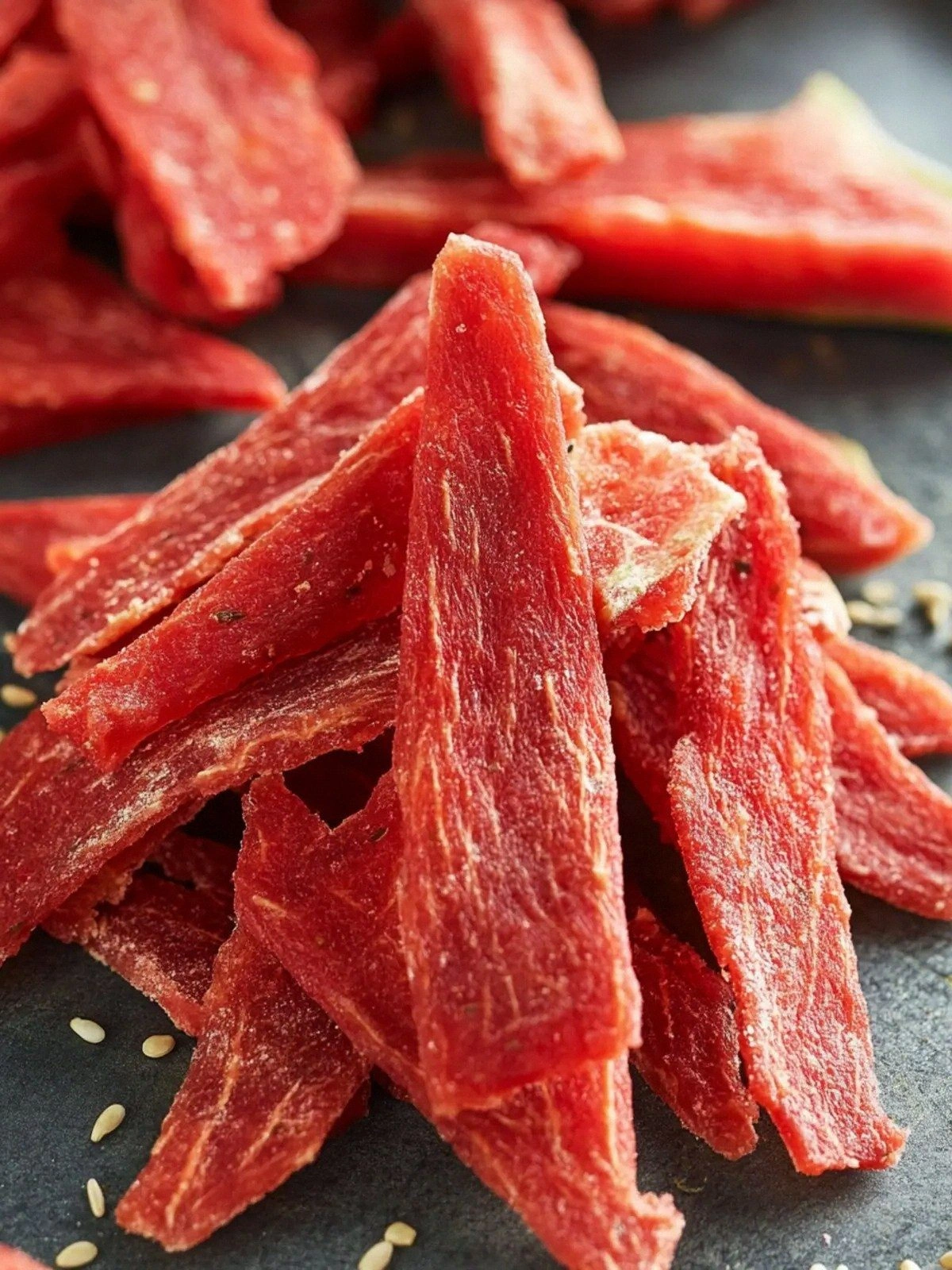
- First, wash the watermelon thoroughly, then cut it into 1/4‑inch thick slices. Use a sharp knife or a mandoline to ensure uniform thickness—this is critical for even drying. Slice from the rind inward so you get a clean, flat surface on each piece. If you notice any bruised spots, trim them away; those spots can trap moisture and spoil the texture.
- Lay the slices on a clean cutting board and sprinkle a light dusting of salt over the entire surface. The salt should be distributed evenly; a clumpy salt patch will create pockets of moisture that slow down the drying process. Let the salted slices sit for about 15 minutes so the salt can draw out a bit of water, improving the crunch later on.
- Preheat your oven to 140°F (60°C). If your oven doesn’t go that low, set it to the lowest setting and then use a thermometer to monitor the temperature. Place a baking sheet in the middle rack and line it with parchment paper. This will catch any drips and prevent sticking.
- Arrange the salted watermelon slices in a single layer on the parchment‑lined tray, ensuring no slices overlap. The oven’s low heat will slowly evaporate the moisture without cooking the fruit. Keep the oven door slightly ajar if you can; this helps the steam escape and speeds up the drying.
- Bake for 4 to 5 hours, checking every hour. The slices are ready when they feel dry to the touch and have a slight sheen of caramelized sugar on the surface. The internal moisture should be minimal; you can test this by pressing the center of a slice with your thumb—it should feel firm, not sticky.
- Once the jerky is done, turn off the oven and let the tray cool inside for about 30 minutes. This gradual cooling prevents sudden temperature changes that could cause the jerky to crack. After cooling, transfer the slices to a wire rack to finish drying completely for another 15 minutes.
- Cool the jerky completely before storing. This final cooling step ensures the texture remains crisp. If you’re in a hurry, you can let them cool at room temperature for an hour, but avoid exposing them to direct sunlight.
- Pack the dried slices in an airtight container or zip‑lock bag, removing as much air as possible. Label the container with the date so you can keep track of freshness. For optimal shelf life, store in a cool, dry place. If you live in a humid climate, consider refrigerating the jerky.
That’s it— you did it. But hold on, I’ve got a few more tricks that’ll take this to another level and keep your taste buds dancing.
Insider Tricks for Flawless Results
The Temperature Rule Nobody Follows
The key to great jerky is a consistent low heat. Many people set the oven to 200°F, but that’s too high; it will steam rather than dry. Use a digital thermometer to monitor the inside of the oven, and if it fluctuates, adjust the rack or use a heat‑resistant oven thermometer to keep it steady. I’ve found 140°F to be the sweet spot for watermelon.
Why Your Nose Knows Best
Your nose can detect when the watermelon has reached the right level of dryness. As the sugars caramelize, a faint sweet aroma will fill the kitchen. If you smell a sharp, almost burnt scent, pull the slices out immediately; you’ve over‑cooked them. The aroma is a quick, reliable indicator of texture.
The 5‑Minute Rest That Changes Everything
After baking, let the tray sit in the oven for 5 minutes with the door closed. This rest period allows the internal temperature to equalize, preventing the jerky from cracking or becoming too brittle. It’s a small step that makes a big difference in chewiness.
The Slice‑Thickness Trick
If you prefer a chewier jerky, slice the watermelon slightly thicker, about 1/3‑inch. For a crispier bite, go thinner, around 1/4‑inch. Thickness affects drying time, so adjust your oven time accordingly. Experimenting with thickness is a great way to customize the texture to your liking.
The Quick Cooling Method
After baking, place the tray on a cooling rack that’s slightly elevated. This airflow around the slices speeds up cooling and prevents condensation that can soften the jerky. I’ve found that a 15‑minute air‑cooling period is sufficient before you transfer them to a storage container.
The Rehydration Trick
If you store the jerky in a humid environment, a tiny splash of water on a paper towel inside the container can help maintain the chewy texture. The water creates a micro‑humid environment that keeps the jerky from drying out completely, preserving that perfect chew.
Creative Twists and Variations
This recipe is a playground. Here are some of my favorite ways to switch things up:
Citrus Burst
Add a tablespoon of freshly grated lemon or lime zest to the salted slices before drying. The citrus will brighten the sweetness and add a refreshing zing that pairs wonderfully with summer salads.
Spicy Heat
Sprinkle a teaspoon of crushed red pepper flakes over the slices before baking. The heat will cut through the natural sweetness, creating a balanced snack that’s perfect for game nights.
Honey Drizzle
Drizzle a light layer of honey over each slice before the final 15 minutes of drying. The honey will caramelize slightly, giving the jerky a glossy finish and a sweet, sticky bite.
Herb Infusion
Mix a tablespoon of dried rosemary or thyme into the salt before dusting the watermelon. The herbs will infuse the fruit with subtle earthy tones, turning the jerky into a sophisticated snack.
Chocolate Swirl
Spread a thin layer of dark chocolate over half the slices before drying. The chocolate will melt and set into a crunchy coating, creating a decadent treat that’s a hit with kids and adults alike.
Storing and Bringing It Back to Life
Fridge Storage
Keep the jerky in a sealed container or zip‑lock bag in the refrigerator for up to 2 weeks. The cool environment slows down oxidation and keeps the flavor fresh. Store in a cool, dry place if you prefer a longer shelf life.
Freezer Friendly
For months‑long storage, freeze the jerky in single layers on a parchment‑lined tray. Once solid, transfer to freezer bags. To thaw, leave at room temperature for a few hours. The texture remains crisp, and the flavor stays intact.
Best Reheating Method
If the jerky becomes a bit brittle after storage, reheat it in a low‑heat oven (200°F) for 5 minutes. Alternatively, microwave on low power for 15‑20 seconds. Adding a tiny splash of water before reheating creates steam that softens the jerky without making it soggy.