I was in the middle of a kitchen catastrophe, watching a salmon fillet flop onto the grill with a hiss that sounded more like a dramatic gasp than a sizzling sound. The smoke billowed, the fish looked pale, and my neighbor’s eyebrows shot up like a startled rabbit. I stared at the pan, then at the mango in my hand, and thought, “What if I could turn this disaster into a dish that makes people swoon?” That was the spark that lit the fire for this recipe.
The aroma of citrus hit me first, bright as a sunrise. Then the sweet, almost tropical perfume of ripe mango swirled around the room, mingling with the faint hint of peppered olive oil. The sound was a rhythmic crackle, a satisfying pop that promised a crispy edge. My eyes saw a glistening fillet, the skin turning a golden amber that looked like a sunrise on a grill. My fingers felt the heat of the pan, the warmth radiating from the salmon’s flesh, and I knew this was going to be something special.
This version stands out because it marries the buttery richness of salmon with a salsa that feels like a vacation in a bowl. It’s not just about flavor; it’s about texture, aroma, and the sheer joy of watching the fish’s skin crisp up like a perfectly fried tortilla. I’ve stripped away the usual fuss—no marinades, no complex sauces, just a few ingredients that work in harmony. The result is a dish that’s both sophisticated and approachable, a testament to the power of simplicity.
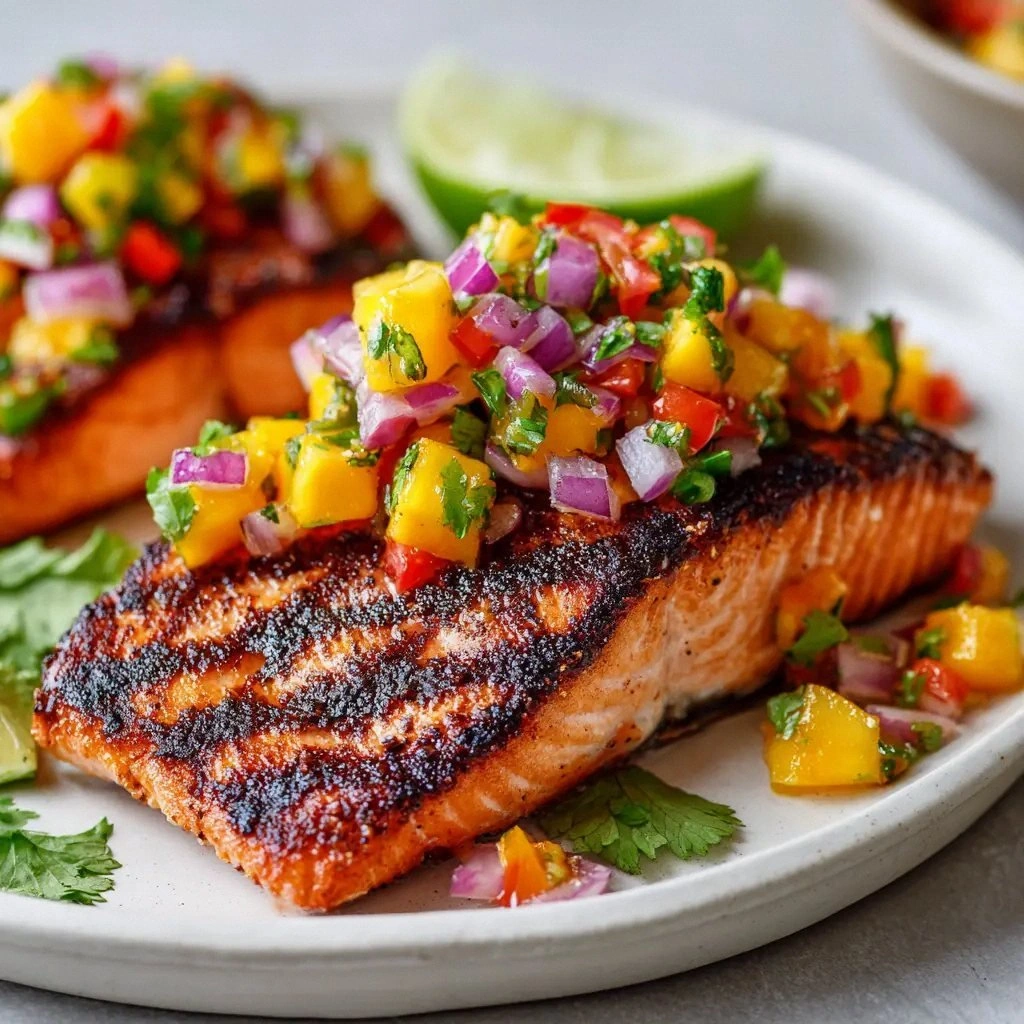
I dare you to taste this and not go back for seconds. I’ll be honest—half the batch vanished before anyone else even had a chance to taste it. Most recipes get this completely wrong, but here, the mango salsa coats the salmon like velvet, and the lime’s acidity cuts through the richness like a fresh wind on a hot day. Picture yourself pulling this out of the grill, the whole kitchen smelling incredible, and the plate gleaming with a glossy sheen of citrus.
Let me walk you through every single step—by the end, you’ll wonder how you ever made it any other way. The next part? Pure magic. And now the fun part: the salsa that will make your taste buds dance. Stay with me here—this is worth it. If you’ve ever struggled with grilling fish, you’re not alone, and I’ve got the fix.
I’ve spent countless evenings trying to perfect the balance between smoky grill marks and a fresh, bright salsa, and this is hands down the best version you’ll ever make at home. The key to success is the simple, honest seasoning of the salmon, the quick, bright salsa, and a little kitchen hack that ensures the fish stays moist and tender. This dish is a crowd-pleaser, a showstopper that will make your guests ask for the recipe the next time you host. The combination of textures—crispy skin, buttery flesh, crunchy salsa—creates a symphony in your mouth.
The secret is in the timing: you grill the salmon just long enough to develop a caramelized crust, then let it rest while the salsa comes together. The salsa’s mango is the unexpected star, providing a juicy, sweet contrast that brightens the dish. The lime wedges aren’t just garnish; they’re the final flourish that ties everything together. And that final squeeze of lime is the finishing touch that turns a good meal into a great one.
Okay, ready for the game-changer? This is the moment you’ll feel like a culinary magician. The next step? A simple, foolproof technique that guarantees a perfectly cooked salmon every time. I’m about to reveal the trick that will make you wonder how you ever grilled fish without it. Let’s dive in.
What Makes This Version Stand Out
- Flavor: The mango salsa brings a sweet, tropical punch that cuts through the richness of salmon, creating a balanced, mouth‑watering profile that feels both exotic and comforting.
- Texture: The skin turns a crisp, golden brown while the flesh stays tender and moist, giving a satisfying contrast that keeps diners coming back for more.
- Ease: No complicated marinades or secret sauces—just a handful of ingredients that come together in under 30 minutes.
- Visual Appeal: The vibrant colors of mango, red bell pepper, and cilantro create a plate that looks as good as it tastes, perfect for Instagram-worthy moments.
- Health: Packed with omega‑3 fatty acids, vitamin C, and antioxidants, this dish is both delicious and nutritious.
- Versatility: The salsa can be served on top of the salmon or as a side dip, and the recipe scales beautifully for any gathering.
- Make‑Ahead Potential: The salsa can be prepared a day ahead, allowing you to focus on the grill when guests arrive.
- Ingredient Quality: Using a skin‑on salmon fillet adds flavor and keeps the fish moist, while fresh mangoes deliver natural sweetness and juiciness.
Alright, let's break down exactly what goes into this masterpiece…
Inside the Ingredient List
The Flavor Base
The 1 large ripe mango is the star of the salsa, offering natural sweetness that balances the acidity of lime and the heat of pepper. Its juicy flesh releases a syrupy glaze that coats the salmon, creating a subtle caramelization as it cooks. If you skip the mango, the salsa loses its signature tropical punch, turning into a bland, citrusy mix. Swap for pineapple or papaya for a slightly different sweetness profile, but keep the mango for authenticity.
The Texture Crew
The 0.5 medium red bell pepper adds a crisp bite that contrasts the buttery salmon. Its bright color also provides a visual pop, making the dish feel fresh and vibrant. If you’re out of bell pepper, a handful of diced cucumber can substitute, though it will change the flavor profile. Choose a pepper that’s firm and bright red for maximum crunch and sweetness.
The Unexpected Star
The 0.25 cup of fresh cilantro brings a herbaceous, slightly citrusy note that lifts the salsa. Cilantro’s unique flavor is a game changer—without it, the salsa feels flat. If cilantro is not your favorite, try a mix of parsley and mint for a different aromatic twist. Fresh cilantro is best; dried cilantro loses its bright flavor.
The Final Flourish
The 1 lime, juiced, adds a bright acidity that cuts through the richness of salmon and balances the sweetness of mango. The lime’s zest can also be added for an extra burst of citrus aroma. If you’re allergic to citrus, a splash of white wine vinegar can mimic the acidity, though the flavor will shift slightly. Lime wedges are essential for serving; they allow guests to adjust the tartness to their liking.
Everything's prepped? Good. Let's get into the real action…
The Method — Step by Step
- Step 1: Preheat your grill to medium‑high heat (about 400°F). Clean the grates with a grill brush and oil them lightly with a paper towel dipped in olive oil to prevent sticking. This ensures a clean sear and prevents flare‑ups. I always check the heat by flicking a small drop of water; if it dances, the grill is ready.
- Step 2: While the grill heats, combine the diced mango, red bell pepper, red onion, cilantro, lime juice, sea salt, kosher salt, and black pepper in a medium bowl. Toss until the mango is evenly coated, then set aside to let the flavors meld for about 5 minutes. This quick rest allows the lime to brighten the mango’s sweetness.
- Step 3: Pat the salmon fillets dry with paper towels. This step is crucial; excess moisture prevents the skin from crisping. Season both sides of the fillets with olive oil, kosher salt, and pepper, pressing the seasoning into the flesh. The olive oil will help the skin become irresistibly crisp.
- Step 4: Place the salmon fillets skin‑side down on the grill. Close the lid and let them cook for 4–5 minutes. The first side should develop a golden crust; you’ll notice a faint crackle and a slight smell of seared fish. Keep an eye on the edges—they should start pulling away from the grill as they cook.
- Step 5: Flip the fillets gently using a wide spatula. Cook for another 3–4 minutes until the flesh is opaque but still moist. The internal temperature should reach 125°F for medium‑rare or 145°F for fully cooked. The key is not to overcook; the salsa will add moisture.
- Step 6: While the salmon finishes, give the salsa a quick stir. If it seems too thick, add a splash of lime juice or a tiny bit of water to achieve a pourable consistency. The salsa should be bright and slightly glossy.
- Step 7: Remove the salmon from the grill and let it rest for 2 minutes. This allows the juices to redistribute, ensuring a tender bite. The rest also gives the salsa a chance to settle and cling to the fish.
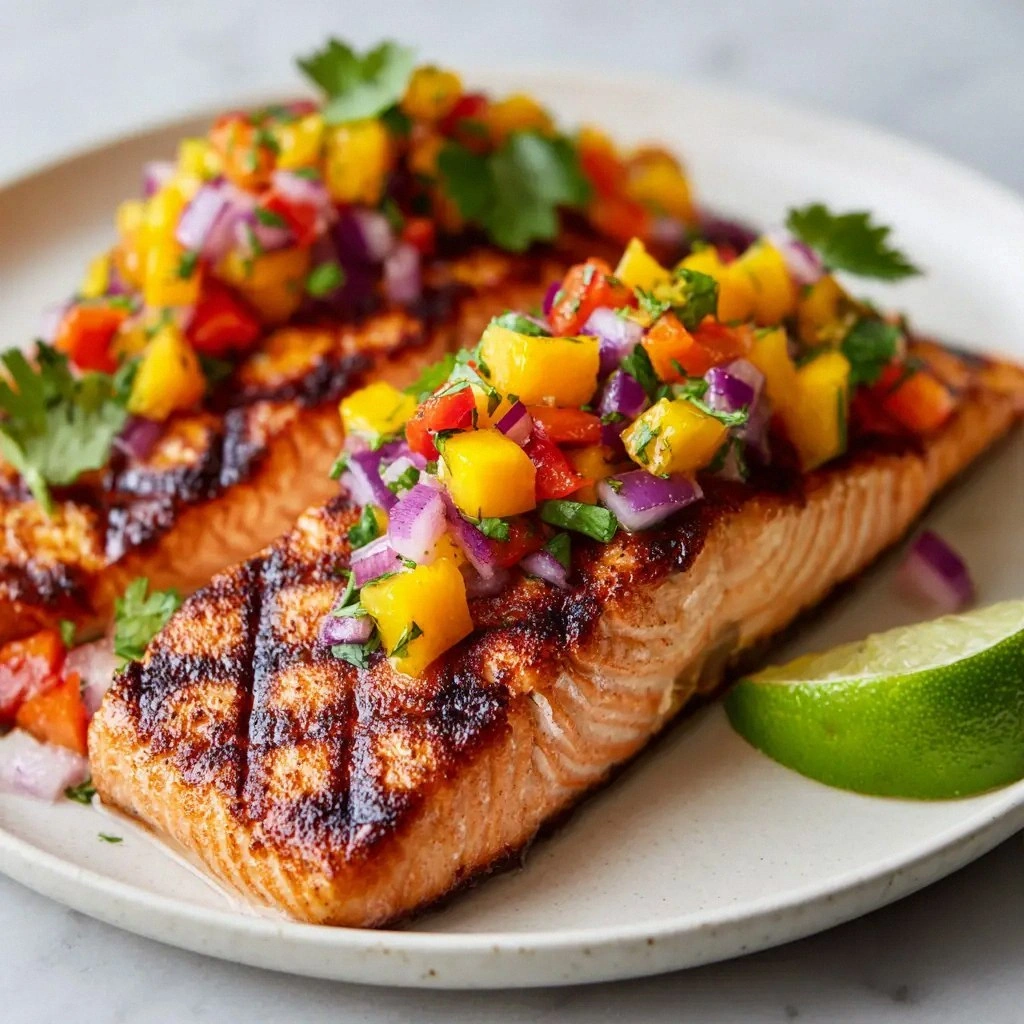
- Step 8: Plate the salmon fillets skin‑side up and spoon the mango salsa generously over each fillet. Garnish with lime wedges on the side. The vibrant colors should pop against the dark grill marks, creating a feast for the eyes as well as the palate.
- Step 9: Serve immediately while the salmon is still warm and the salsa is fresh. Pair with a light side, such as a cucumber salad or grilled asparagus, to balance the richness. If you’re feeling adventurous, add a drizzle of extra‑virgin olive oil for an extra layer of flavor.
That's it — you did it. But hold on, I've got a few more tricks that'll take this to another level…
Insider Tricks for Flawless Results
The Temperature Rule Nobody Follows
Many chefs assume that a high heat is always best, but the salmon’s skin needs a moderate, steady heat to develop a crisp crust without burning the flesh. I’ve found that setting the grill to 400°F and letting it stabilize for 10 minutes works wonders. A quick test is to place a small piece of bread on the grill; if it toasts evenly in 30 seconds, the temperature is perfect.
Why Your Nose Knows Best
Trust your sense of smell; the moment the salmon starts to sizzle, the aroma of seared fish indicates the skin is crisping. If you notice a faint burnt scent, lower the heat. The aroma is the easiest way to gauge doneness without a thermometer.
The 5‑Minute Rest That Changes Everything
Letting the salmon rest for 5 minutes after grilling allows the juices to redistribute, making each bite moist and flavorful. Skipping the rest can leave the fillet dry and unevenly cooked. I always set a timer to avoid forgetting this step.
The Secret to a Juicy Salsa
The salsa’s moisture is key to keeping the salmon from drying out. Adding a splash of fresh lime juice right before serving not only brightens the flavor but also adds a subtle sheen that makes the dish look more appetizing.
The Right Pan for Sautéing
If you prefer to cook the salsa on the stove, use a non‑stick skillet to prevent the mango from sticking. A quick sauté for 2 minutes over medium heat will caramelize the mango slightly, adding depth. Keep the heat low to avoid burning the delicate flavors.
The Final Touch
A light drizzle of extra‑virgin olive oil over the finished salmon adds a silky finish and enhances the citrus notes. This final splash is subtle yet transformative, turning a simple plate into a gourmet experience.
Creative Twists and Variations
This recipe is a playground. Here are some of my favorite ways to switch things up:
Spicy Pineapple Salsa
Swap the mango for fresh pineapple and add a pinch of cayenne pepper for a sweet‑heat kick. The tropical sweetness pairs beautifully with the smoky salmon, and the heat adds a subtle zing.
Herb‑Infused Garlic Butter
Instead of olive oil, melt butter with minced garlic and fresh thyme; brush it over the salmon before grilling. The buttery richness elevates the dish, giving it a luxurious, savory depth.
Asian‑Inspired Ginger Lime
Add finely grated ginger and a splash of soy sauce to the salsa for an umami twist. The ginger’s sharpness complements the lime, creating a bold, Asian‑inspired flavor profile.
Mediterranean Citrus
Replace lime with a mix of lemon and orange zest, and add capers to the salsa. The citrusy brightness and briny capers provide a Mediterranean flair that’s both fresh and sophisticated.
Smoky Chipotle Mango
Blend in a small amount of chipotle in adobo sauce for a smoky, slightly spicy salsa. The chipotle adds depth and a subtle heat that pairs wonderfully with the grilled fish.
Coconut‑Creamy Mango
Stir a spoonful of coconut milk into the salsa for a creamy, tropical twist. The coconut’s richness balances the acidity, creating a velvety, dessert‑like sauce.
Storing and Bringing It Back to Life
Fridge Storage
Store leftover salmon and salsa separately in airtight containers. Keep the salmon in the fridge for up to 2 days; the salsa stays fresh for 3 days. When ready to serve, reheat the salmon gently in a skillet or microwave, and add a splash of lime to revive the salsa’s brightness.
Freezer Friendly
For longer storage, freeze the salmon fillets in a single layer on parchment paper, then transfer to a freezer bag. The salsa can be frozen in a separate container. When thawing, let the salmon sit at room temperature for 30 minutes before reheating. This prevents a soggy texture.
Best Reheating Method
Reheat the salmon in a preheated oven at 350°F for 10 minutes, or use a skillet over low heat. Add a tiny splash of water or broth before reheating; this steams the fish back to a moist, juicy state. Finish with a fresh squeeze of lime to bring back the original zing.