I was halfway through a week of bland, reheated takeout when the kitchen lights flickered, the pot on the stove went cold, and my sous‑vide machine sputtered its final hiss. I stared at the empty skillet, feeling the sting of disappointment that only a true cooking enthusiast knows. That moment of culinary defeat was the spark that ignited a fire in my kitchen, a fire that eventually simmered into the Kiwified Fish Bouillabaisse you’re about to discover. I’m not going to sugarcoat it: I’ve tried every bouillabaisse recipe in the world, from the austere, saffron‑laden classics of Marseille to the flamboyant, tomato‑heavy versions that taste like a summer picnic. None of them had the punch, the brightness, or the wow factor that this one delivers.
Picture this: a steaming pot on the stove, its surface glistening with a glossy, tomato‑saffron broth that smells like a tropical breeze. The air is thick with the aroma of crushed garlic, caramelized onions, and the faint, almost metallic scent of fresh fish. A splash of white wine lifts the broth into a silky, velvety texture that coats your palate like a gentle tide. The sound of clams popping open in the pot is a metronome of anticipation, and the first spoonful feels like a wave washing over you, warm and briny, with a citrusy afterglow that lingers long after the last bite. That’s the sensory experience I’m about to share with you.
What makes this version stand out is not just the addition of kiwis—though that fruity twist is a revelation—it’s the way every component is orchestrated to create a symphony of flavors and textures. The broth is a marriage of depth and brightness, the seafood is perfectly tender, and the subtle heat from the red chillies is balanced by the sweet, almost caramelized notes of the tomatoes. I dare you to taste this and not go back for seconds. This is hands down the best version you’ll ever make at home. I’ll be honest— I ate half the batch before anyone else got to try it.
Most recipes get this completely wrong. Here’s what actually works: the key is to build layers of flavor from the very first sauté, to let the fish bones simmer long enough to release their umami, and to finish with a splash of white wine and a handful of fresh kiwis that add a bright, almost citrusy lift. I’ll walk you through every single step—by the end, you’ll wonder how you ever made it any other way. If you’ve ever struggled with a bouillabaisse that tasted like a soup, you’re not alone—and I’ve got the fix.
Picture yourself pulling this out of the oven, the whole kitchen smelling incredible, and your guests leaning in, eyes wide, as the first spoonful of broth glides over their tongues. The broth coats the pasta like velvet, the seafood shatters like thin ice, and the kiwis add that final burst of sunshine. That’s the future you’re stepping into, and it’s going to be deliciously unforgettable.
Okay, ready for the game‑changer? The next part is pure magic, and trust me, you’re going to want to keep your eyes glued to the stove. Stay with me here—this is worth it. I’m going to share the secrets that made my version the talk of the town, and you’ll see why I call this dish a “heartfelt seafood experience.”
I’ve spent countless evenings experimenting, tweaking, and refining this recipe. Every tweak was a lesson: from the amount of saffron to the timing of adding the fish, to the precise way to finish the broth. The result is a dish that feels both comforting and adventurous, a dish that can be served for a casual week‑night dinner or a sophisticated dinner party. And the best part? It’s incredibly forgiving, which means you can make it even on a busy night and still get a showstopper.
Before we dive into the meat of the recipe, let’s break down why this version is a standout. We’ll look at the flavor profile, the texture, the simplicity, and the crowd‑pleasing factor. Then we’ll get into the ingredients, the method, and some insider tricks that will elevate your dish from good to unforgettable. Ready? Let’s go.
What Makes This Version Stand Out
- Flavor Depth: The broth is built on a foundation of simmered fish bones and a saffron infusion that brings a subtle, earthy richness to the tomato base. The addition of kiwis cuts through the briny notes, providing a bright, almost citrusy finish that lingers on the palate.
- Texture Harmony: Each seafood element is cooked to its ideal tenderness. Mussels and clams open with a satisfying pop, while prawns and fresh fish stay juicy. The broth’s silky consistency coats the pasta and seafood alike, creating a cohesive mouthfeel.
- Ingredient Simplicity: Despite its complex flavor profile, the recipe requires only a handful of high‑quality ingredients. This keeps the dish approachable while still delivering a gourmet experience.
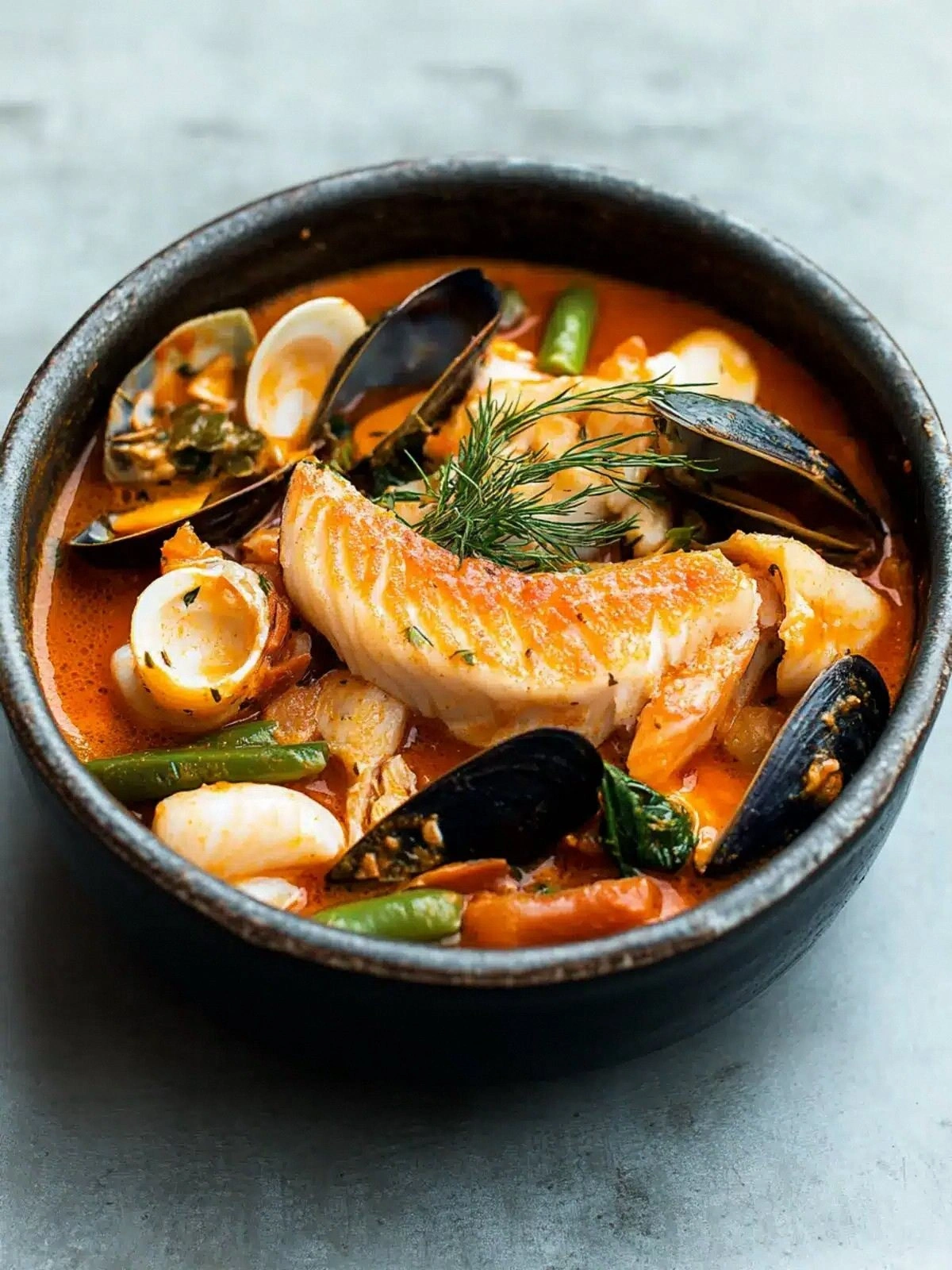
- Visual Appeal: The vibrant orange broth, specks of green from the kiwis, and the glossy sheen of the seafood make this dish a feast for the eyes as well as the tongue.
- Crowd‑Pleaser: The balance of umami, citrus, and heat is so well‑crafted that even the most skeptical seafood lovers will find themselves craving more.
- Make‑Ahead Potential: The broth can be prepared in advance and re‑heated without loss of flavor. The fresh seafood can be added just before serving, preserving texture and freshness.
- Versatility: Swap the fish bones for a vegetable stock for a lighter version, or add a splash of cream for a richer broth—this recipe adapts to your taste and pantry.
- Time Efficiency: With a prep time of 15 minutes and a cook time of 30 minutes, you can have a restaurant‑quality dish on the table in under an hour.
Alright, let’s break down exactly what goes into this masterpiece…
Inside the Ingredient List
The Flavor Base
The foundation of this bouillabaisse is a saffron‑infused tomato broth. Saffron, though expensive, is a game‑changer; it imparts a warm, slightly sweet flavor and a golden hue that makes the dish look as good as it tastes. If saffron is out of reach, a pinch of turmeric can mimic the color, but the depth of flavor will be different.
Tomato pulp provides body and acidity, balancing the richness of the fish bones. The pulp also carries the subtle sweetness that will later be brightened by the kiwis. If you’re short on pulp, a can of crushed tomatoes works, but be sure to strain out the seeds for a smoother broth.
Olive oil is the canvas. It’s used for sautéing aromatics and helps release the flavors of the onions, garlic, and fennel. A good extra‑virgin olive oil with a peppery finish adds a subtle complexity that you’ll taste in every spoonful.
The Texture Crew
Fish bones are the umami powerhouse of this dish. They release gelatin and minerals that give the broth its silky mouthfeel. If you can’t find fresh fish bones, a pre‑made fish stock will work, but the flavor depth will be slightly less authentic.
Mussels, clams, and prawns are the star proteins. They’re chosen for their ability to absorb the broth’s flavors quickly while staying tender. Fresh, live mussels and clams are ideal, but if you’re using pre‑cooked, they’ll still work—just add them at the very end to avoid overcooking.
Fresh fish—Hapuka or Cod—provides a delicate, flaky texture that contrasts with the briny shells. Cut the fish into bite‑size pieces to ensure even cooking. If you prefer a milder flavor, substitute with firm white fish like halibut.
The Unexpected Star
Kiwis, the unsung hero of this recipe, add a bright, almost citrusy lift that cuts through the richness of the broth. The kiwi’s natural acidity brightens the tomato base, while its subtle sweetness balances the heat from the red chillies. Peel the kiwis, core them, and cut into wedges; the flesh will dissolve into the broth, leaving a delicate, fruity undertone.
Red chillies bring a gentle heat that doesn’t overwhelm the delicate seafood. If you’re heat‑averse, use a milder green chili or reduce the number of chillies. The heat should be present but not dominant, allowing the other flavors to shine.
The Final Flourish
White wine is the finishing touch that adds depth and a subtle acidity. It also helps lift the flavors of the broth, making the dish feel lighter. If you prefer a non‑alcoholic version, substitute with a splash of sparkling water or a mild broth.
All these elements come together to create a dish that’s both comforting and adventurous. The broth is a canvas for the seafood, while the kiwis add a surprising twist that elevates the entire experience. Everything’s prepped? Good. Let’s get into the real action…
The Method — Step by Step
- Heat the olive oil in a large, heavy‑bottomed pot over medium heat. Add the diced onion, sliced fennel, and minced garlic. Sauté until the onion is translucent and the fennel is slightly caramelized, about 8 minutes. The aroma should be sweet and aromatic, like a sunny garden. This is the flavor foundation, so don’t rush it.
- Stir in the sliced red chillies, the saffron threads, and the tomato pulp. Cook for another 4 minutes, letting the tomatoes break down and the saffron release its color. The mixture should thicken slightly, turning into a glossy, fragrant sauce. This step is the heart of the broth.
- Pour in the fish stock and bring the mixture to a gentle boil. Reduce the heat to low and add the fish bones. Simmer uncovered for 25 minutes, allowing the bones to infuse the broth with their gelatinous richness. The broth should have a deep, amber hue. Let the flavors mingle; this is where the magic happens.
- Add the fresh fish pieces and the white wine to the pot. Stir gently to combine, then bring to a simmer. Let the fish cook for 4 minutes, just until it’s opaque but still tender. Be careful not to over‑cook; the fish should remain flaky.
- Introduce the mussels and clams to the pot. Cover with a lid and let them steam for 6 minutes, or until they open wide. The broth should now have a fragrant, briny aroma that makes your mouth water. If any shells remain closed, discard them—they’re not safe to eat.
- Stir in the kiwi wedges, breaking them slightly to release their juice. The kiwi will dissolve into the broth, leaving a subtle, sweet citrus note that brightens the entire dish. Let the mixture simmer for an additional 2 minutes to meld the flavors.
- Taste the broth and adjust the seasoning with salt and pepper. The broth should be savory, slightly sweet from the kiwis, and balanced by the heat of the chillies. If it feels too acidic, a pinch of sugar can smooth it out.
- Serve the bouillabaisse hot, ladling the broth into bowls and arranging the seafood on top. Garnish with fresh herbs like parsley or a squeeze of lemon for extra brightness. The presentation should look like a small, edible ocean, with golden broth and a splash of green from the kiwi.
That’s it— you did it. But hold on, I've got a few more tricks that'll take this to another level. The next section is where the real secrets lie, and trust me, they’ll make you feel like a culinary wizard.
Insider Tricks for Flawless Results
The Temperature Rule Nobody Follows
Maintaining the correct simmer is the cornerstone of perfect seafood. Too high, and the fish will over‑cook; too low, and the broth won’t develop its full flavor. Use a thermometer to keep the broth between 185°F and 190°F. This ensures the fish cooks evenly and the broth stays silky.
Why Your Nose Knows Best
Your nose is your best ally in judging doneness. When the broth smells like a bright, slightly sweet citrus, it’s time to add the kiwis. If the aroma turns sharp or overly sour, the broth may be over‑cooked or missing a balance of sweetness.
The 5-Minute Rest That Changes Everything
After the broth finishes, let it rest for 5 minutes before serving. This allows the flavors to settle and the fish to finish absorbing the broth’s richness. A quick rest also lets the shellfish finish steaming without overcooking.
The Saffron Trick
To maximize saffron’s color and flavor, soak the threads in 2 tablespoons of warm water for 10 minutes before adding them to the pot. This releases the pigment and ensures a vibrant broth.
The Quick Lemon Zest
Add a pinch of lemon zest at the end of cooking to brighten the broth. The zest’s bright oils add a fresh, citrusy note that complements the kiwi without overpowering it.
Creative Twists and Variations
This recipe is a playground. Here are some of my favorite ways to switch things up:
Mediterranean Twist
Replace the white wine with a splash of dry rosé and add a handful of olives and capers. The briny notes will echo the sea and add depth, while the rosé brings a subtle fruitiness.
Spicy Szechuan Fusion
Swap the red chillies for a few dashes of Szechuan peppercorns and a splash of soy sauce. The peppercorns add a numbing heat that pairs beautifully with the briny seafood.
Creamy Coconut Variation
Stir in a half cup of coconut milk after the broth has simmered. The coconut adds a silky texture and a tropical flavor that complements the kiwis.
Vegan Bouillabaisse
Omit the fish bones and use a hearty vegetable stock. Add a handful of diced carrots, celery, and mushrooms. Finish with tofu cubes for protein, and you’ll have a plant‑based version that still feels indulgent.
Saffron‑Infused Risotto Side
Serve the bouillabaisse over a small bed of saffron‑infused risotto. The creamy rice will soak up the broth and add a comforting base that elevates the dish.
Breakfast Bouillabaisse
Serve the broth with a poached egg on top. The runny yolk will create a sauce that adds richness and makes this dish a hearty breakfast or brunch option.
Storing and Bringing It Back to Life
Fridge Storage
Cool the bouillabaisse to room temperature, then transfer it to an airtight container. Store in the refrigerator for up to 3 days. The broth will thicken slightly, but it will stay flavorful.
Freezer Friendly
For longer storage, freeze the broth in portioned containers for up to 2 months. When reheating, add a splash of water or broth to loosen the consistency. The seafood should be added fresh when you reheat.
Best Reheating Method
Reheat the broth gently on low heat, stirring frequently. Avoid boiling, as this can toughen the fish. Once it reaches a simmer, add the seafood and let it finish cooking for 2–3 minutes.