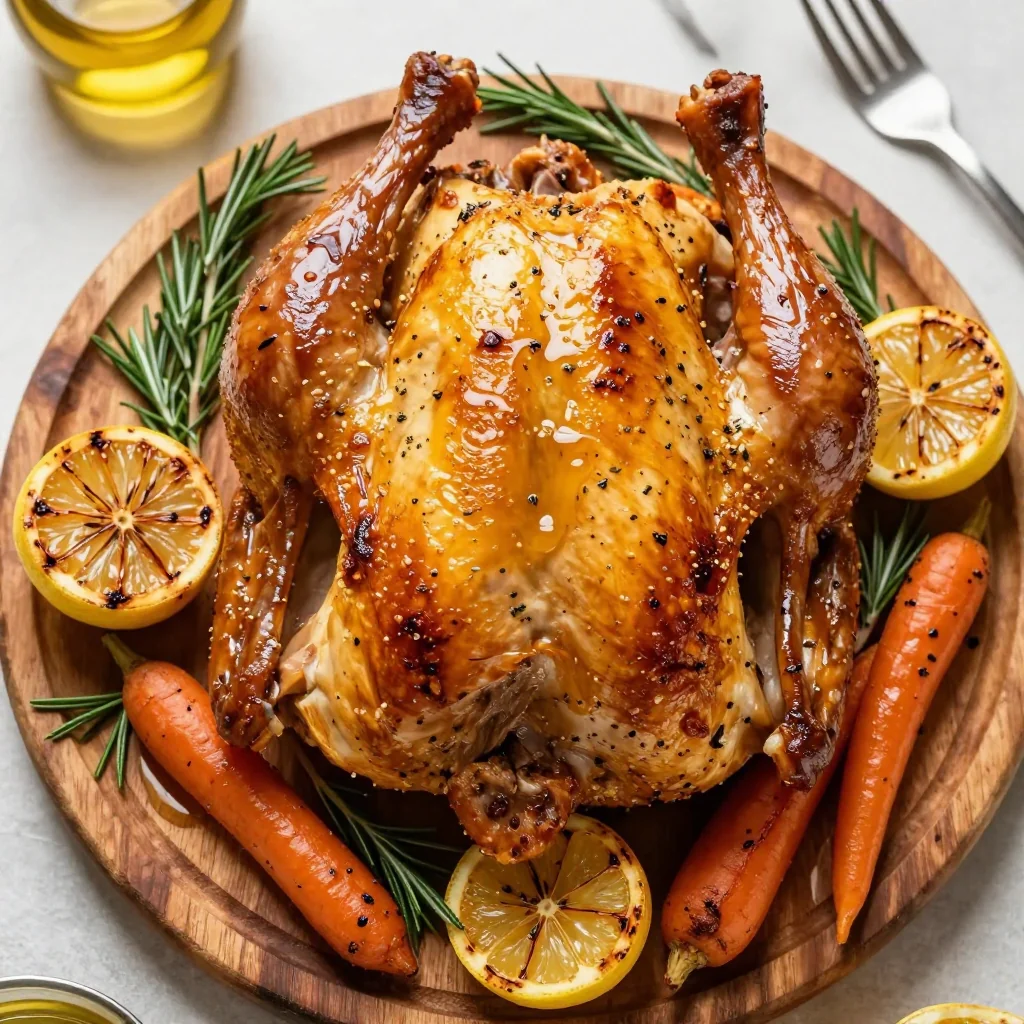
Love this? Pin it for later! 📌
Why This Recipe Works
- Two-day dry brine: Salt, lemon zest, and herbs penetrate deep into the meat for exceptionally juicy, well-seasoned bites.
- Butter & olive-oil baste: A 50/50 blend encourages browning without burning, giving you shatter-crisp skin.
- Sheet-pan vegetables: Potatoes, fennel, and leeks roast underneath, soaking up schmaltz and lemony drippings.
- High-heat finish: A final 10-minute blast at 450 °F caramelizes the exterior without drying the breast.
- Make-ahead gravy base: While the bird rests, the pan juices transform into a silky sauce—no extra skillet required.
- Flexible sides: Pairs equally well with collard greens, wild-rice pilaf, or a simple arugula salad for a lighter January table.
Ingredients You'll Need
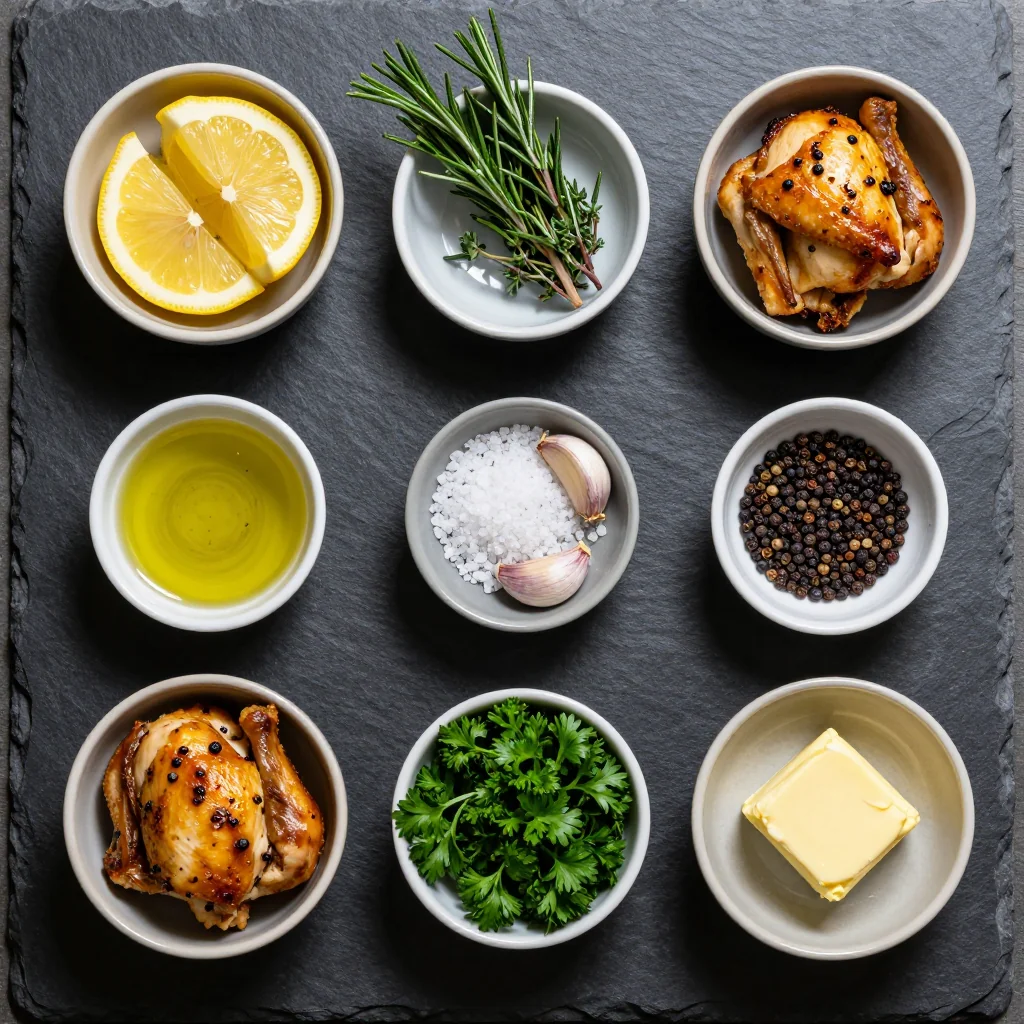
Quality here is non-negotiable—this is a holiday bird, after all. Start with a 4½–5 lb whole pasture-raised chicken; the fat is more flavorful and the bones make a gorgeous stock for tomorrow’s soup. If you can only find a larger 6-lb bird, add 10 minutes per pound and use a lower rack so the top doesn’t scorch.
Kosher salt is essential for the dry brine—its flaky crystals dissolve slowly, drawing moisture out and then back in. I use Diamond Crystal; if you’re using Morton, cut the volume by 25%. Fresh thyme and rosemary give woodsy backbone, while flat-leaf parsley adds a grassy note that keeps the profile bright. Strip the leaves yourself; pre-chopped herbs oxidize fast and taste dusty.
Choose organic lemons with taut, fragrant skin. You’ll need both zest and juice, so scrub them under warm water to remove wax. The zest goes into the brine; the juice is whisked into the basting butter. If Meyer lemons have arrived at your market, swap one in for half the fruit—you’ll get sweeter, floral notes that pair beautifully with the fennel underneath.
Butter should be European-style, 82% fat. The extra butterfat helps the skin blister without spotting. I keep a block of Kerrygold in the freezer; grating it over the breast before roasting lets it melt slowly and self-baste as the bird cooks.
For the vegetables, look for Yukon Gold potatoes—they hold their shape but still absorb juices—and a firm fennel bulb with bright fronds attached. Those fronds get chopped and scattered on top at the end, echoing the anise notes in the pan sauce.
How to Make Lemon Herb Roasted Chicken for a Fresh MLK Day Dinner
Dry-brine 48 hours ahead
Pat the chicken dry inside and out with paper towels. Combine 3 Tbsp kosher salt, the zest of 2 lemons, 1 tsp cracked black pepper, 2 tsp chopped thyme, and 1 tsp minced rosemary. Slip your fingers under the skin over the breast and thighs to loosen, then rub two-thirds of the salt mixture directly onto the meat. Season the cavity and skin with the remainder. Place on a wire rack set over a rimmed baking sheet, uncovered, in the lower third of the fridge. Let the skin air-dry for 48 hours—this is the secret to shatter-crisp skin.
Truss & temper
Remove the bird 90 minutes before roasting to take the chill off. Tuck the wing tips behind the back and tie the legs together with kitchen twine; this promotes even cooking and picture-perfect presentation. Slide 3 thin lemon slices and 2 crushed garlic cloves under the skin over each breast.
Prep the sheet-pan vegetables
Heat oven to 425 °F. Quarter 1½ lbs Yukon Gold potatoes, slice 1 fennel bulb into ½-inch wedges, and cut 2 leeks into 2-inch batons. Toss with 2 Tbsp olive oil, 1 tsp salt, and a few grinds of pepper. Spread in a single layer on a heavy-duty rimmed sheet pan. Nestle the chicken, breast-side up, in the center so the vegetables catch the drippings.
Butter-baste & roast low
Melt 4 Tbsp unsalted butter with the juice of 1 lemon, 1 tsp honey, and 1 tsp chopped parsley. Brush half over the chicken. Roast 25 minutes, then lower heat to 375 °F. Continue roasting 55–65 minutes longer, basting every 15 minutes with the remaining butter mixture. If the breast browns too quickly, tent loosely with foil.
Blast for crispy skin
Increase oven to 450 °F for the final 10 minutes. Rotate the pan once for even coloring. The skin should blister into golden bubbles and an instant-read thermometer inserted deep into the thickest part of the thigh (without touching bone) should register 165 °F.
Rest & make the pan sauce
Transfer the chicken to a carving board and tent loosely with foil; rest 20 minutes. Meanwhile, place the sheet pan over medium burners (use two if needed). Whisk 2 tsp flour into the drippings, then add ½ cup dry white wine and ½ cup low-sodium chicken stock. Simmer, scraping up the fond, until silky. Finish with 1 tsp Dijon and a squeeze of lemon.
Carve & serve
Remove the twine. Slice through the skin between the leg and body, pop the joint, and separate the thigh and drumstick. Slice each breast against the grain into thick medallions. Arrange on a platter with the vegetables, drizzle with the pan sauce, and scatter reserved fennel fronds and parsley over the top.
Expert Tips
Use two thermometers
An oven probe stays in the thigh; an instant-read double-checks the thickest part of the breast. Pull the bird when the lowest temp hits 160 °F; carry-over cooking will take it to 165 °F while it rests.
Don’t skip the rack
Airflow underneath keeps the back from stewing in its juices, ensuring the entire skin crisps. If you don’t own a rack, crinkle foil into a 1-inch snake and coil it under the bird.
Brine while you sleep
Short on time? A 12-hour overnight brine still beats no brine. Pat the skin very dry and add an extra 5 minutes to the 450 °F blast to compensate for surface moisture.
Save the backbone
If you spatchcock a second chicken, freeze the backbone. It adds incredible depth to your next batch of chicken stock—perfect for February soup nights.
Color-coded boards
Designate a green cutting board for herbs and lemons to avoid cross-contamination. Citrus oils can linger on plastic and subtly flavor onions if you switch tasks without washing.
Re-crisp leftovers
Warm pieces skin-side up in a 400 °F air-fryer for 4 minutes. A quick mist of oil revives crunch without drying the meat.
Variations to Try
-
Citrus swap: Replace half the lemons with blood oranges for ruby-colored skin and a sweeter glaze. Reduce honey in the baste by half.
-
Smoky heat: Add ½ tsp smoked paprika and ¼ tsp cayenne to the salt brine. Serve with a side of Alabama white sauce for dipping.
-
Vegetarian main: Use the same seasoning on a whole head of cauliflower. Roast 45 minutes, basting with lemon-herb butter. The method translates beautifully.
-
One-pot risotto: Stir 1 cup Arborio rice and 2½ cups warm stock into the vegetables during the last 25 minutes of roasting. Cover with foil and let the rice absorb the schmaltz.
-
Gluten-free gravy: Replace flour with 1 tsp arrowroot starch whisked into cold stock for a silky, gluten-free pan sauce.
-
Make it miniature: Split Cornish hens, brine 12 hours, and roast on a smaller pan. Dinner feels luxurious and cooks in 40 minutes.
Storage Tips
Leftovers keep up to 4 days refrigerated in an airtight container. For best texture, carve the meat off the bone first; bones continue to release moisture that softens the skin. Store carved meat and vegetables separately so the veggies don’t become soggy.
To freeze, place cooled slices in a single layer on a parchment-lined sheet pan; freeze 2 hours, then transfer to a zip-top bag with as much air removed as possible. Frozen chicken is best within 3 months. Thaw overnight in the fridge, then reheat as directed above.
The pan sauce thickens as it cools. Thin with a splash of stock while reheating, and taste for seasoning—it often needs another pinch of salt after chilling.
Save the carcass for stock. Break it into pieces, add any roasted vegetables that didn’t get eaten, cover with water, and simmer 2 hours with a bay leaf and peppercorns. The resulting broth is golden and lemon-perfumed—perfect for January flu-season soups.
Frequently Asked Questions
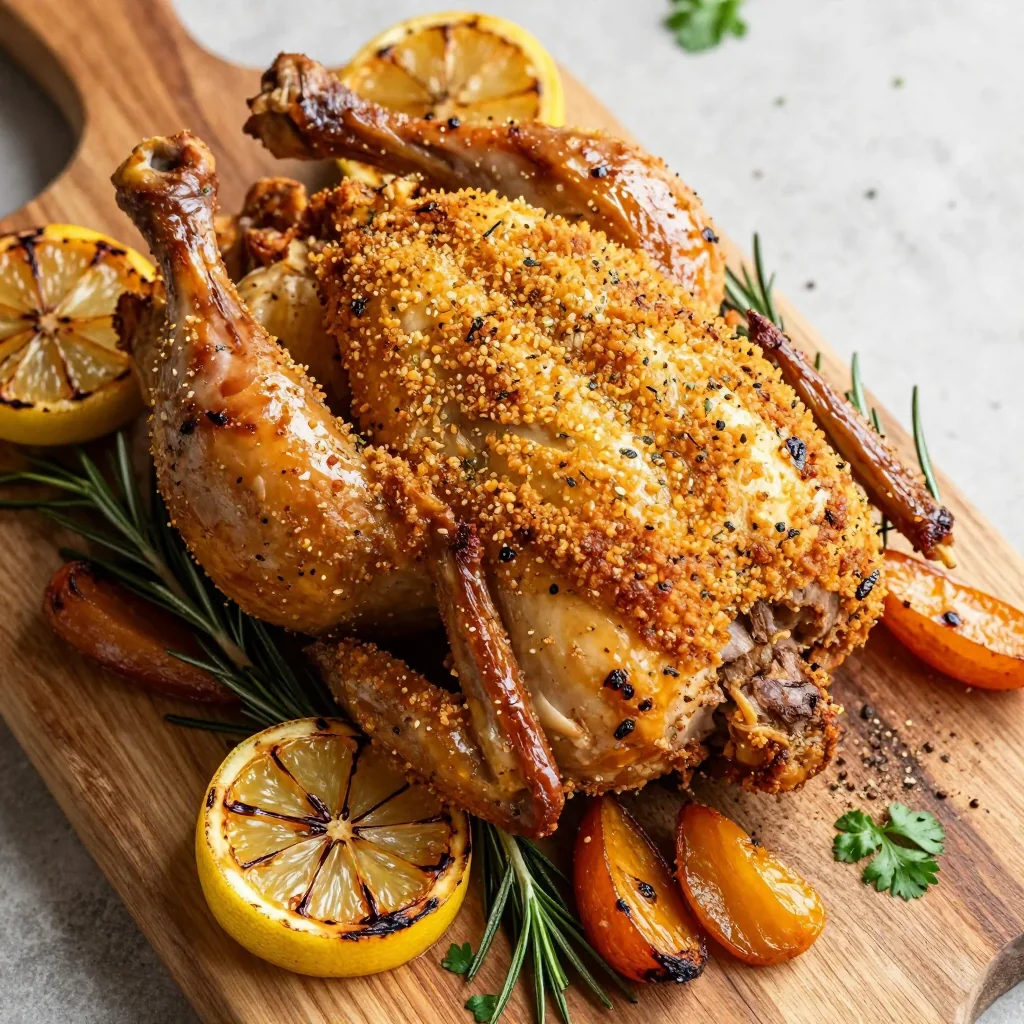
Lemon Herb Roasted Chicken for a Fresh MLK Day Dinner
Ingredients
Instructions
- Brine: Pat chicken dry. Mix salt, lemon zest, pepper, thyme, and rosemary. Rub under skin and over surface. Refrigerate uncovered on a rack for 48 hours.
- Preheat & prep: Remove chicken 90 minutes before roasting to temper. Heat oven to 425 °F. Toss vegetables with olive oil and 1 tsp salt; spread on sheet pan.
- Roast: Nestle chicken breast-side up among vegetables. Melt butter with lemon juice, honey, and parsley; brush half over bird. Roast 25 minutes.
- Lower & baste: Reduce heat to 375 °F. Roast 55–65 minutes more, basting every 15 minutes, until thigh reads 160 °F.
- Crisp: Increase to 450 °F for 10 minutes, rotating pan once. Skin should blister and thermometer should read 165 °F.
- Rest & sauce: Transfer chicken to board; tent with foil 20 minutes. Set sheet pan over burners; whisk in flour, wine, and stock. Simmer 3 minutes, stir in Dijon and lemon juice.
- Serve: Carve chicken; arrange with vegetables. Spoon pan sauce over top and scatter fennel fronds.
Recipe Notes
For crispiest skin, don’t skip the 48-hour air-dry. If time-pressed, use a hair-dryer on cool setting for 5 minutes to remove surface moisture before roasting.