It all started on a rainy Tuesday when I decided to experiment with an old family recipe that had somehow slipped into the back of my pantry. I was halfway through a stack of pre‑made sandwich ingredients, feeling a little guilty for not using the fresh, savory flavors that had always defined my Sunday lunches. The moment the first slice of the stale bread hit the counter, I could hear the unmistakable hiss of disappointment echoing through the kitchen. I knew I had to turn that culinary flop into something unforgettable.
Picture this: the kitchen lights dim, the air thick with the aroma of cured meats and olives, and the rhythmic clatter of a sandwich press. The sound of the bread popping to a golden crust, the hiss of olive oil as it coats the fillings, the gentle snap of cheese as it melts into a silky sheen. My senses were fully engaged: the sharp tang of olives, the smoky depth of salami, the buttery softness of provolone, and the subtle nuttiness of Swiss. Each bite was a symphony of textures and flavors that made my taste buds dance.
What sets this version apart is that I’ve taken the classic Muffuletta and elevated it with a few intentional tweaks: a homemade olive salad that carries a burst of freshness, a balanced layering of meats to create depth, and a precise timing that ensures the bread stays crisp while the fillings meld together. The result is a sandwich that feels both indulgent and comforting, a true testament to the power of simple, high‑quality ingredients. I dare you to taste this and not go back for seconds.
Hold on, because there’s a twist you won’t expect: a subtle infusion of citrus zest into the olive salad that brightens the entire sandwich, turning a classic into a modern masterpiece. By the end of this guide, you’ll wonder how you ever made it any other way. Let me walk you through every single step — by the end, you’ll wonder how you ever made it any other way.
What Makes This Version Stand Out
- Flavor: The homemade olive salad adds a bright, briny punch that cuts through the richness of the meats and cheeses, creating a harmonious balance that’s both bold and refreshing.
- Texture: The sturdy, round sesame loaf holds up against the moist fillings, while the crisp crust provides a satisfying crunch that contrasts with the silky melted cheeses.
- Ingredient Quality: Every component is sourced from trusted vendors, ensuring the freshest cured meats and the finest cheeses, which elevate the overall taste.
- Layering Technique: A meticulous layering order guarantees that each bite delivers a perfect bite of every element, preventing any one component from overpowering the rest.
- Make‑Ahead Potential: The sandwich can be assembled a day in advance, thanks to the olive salad’s ability to keep its flavors intact, making it ideal for parties or quick lunches.
- Audience Appeal: Whether you’re a seasoned foodie or a casual eater, the combination of familiar flavors and a touch of culinary flair will resonate with everyone.
- Visual Impact: The vibrant green of the olive salad and the golden sheen of melted cheeses create an eye‑catching presentation that’s Instagram‑ready.
- Time Efficiency: Despite its richness, this sandwich can be assembled in under 30 minutes, making it a practical choice for busy weekdays.
Inside the Ingredient List
The Flavor Base
Olive Salad: This is the star condiment that brings everything together. The chopped olives, pickled vegetables, and aromatic herbs create a tangy, umami‑rich sauce that coats the meats like velvet. If you skip it, the sandwich feels flat and lacks that essential brightness. A quick swap could be a homemade pesto for a different herbal profile, but the olive salad’s briny depth is irreplaceable. When selecting olives, opt for a mix of Kalamata and green olives to achieve a balanced flavor spectrum. The pickled vegetables should be crisp, not soggy, to maintain texture.
The Meat Ensemble
Salami, Ham, Mortadella: These cured meats form the core of the sandwich’s savory profile. Salami adds a spicy kick, ham offers a mild, sweet contrast, and mortadella brings a silky, slightly sweet richness. Together they create a complex flavor tapestry that keeps each bite interesting. If you’re vegetarian, you can replace the meats with marinated tofu or roasted vegetables, but the authentic taste will change. When sourcing meats, look for a light smoke flavor and minimal added preservatives.
The Cheese Layer
Provolone, Swiss: The cheeses melt together to form a creamy, gooey texture that binds the sandwich together. Provolone provides a mild, buttery taste, while Swiss adds a subtle nuttiness that balances the acidity of the olives. Skipping the cheeses would result in a drier sandwich lacking that luscious mouthfeel. If you’re lactose intolerant, a vegan cheese that melts well can be an alternative, though the flavor profile will shift.
The Bread Foundation
Muffuletta Bread: The sturdy, round sesame loaf is the perfect foundation with its slightly crisp crust and soft interior. It’s designed to hold up against the moist fillings without becoming soggy. If you can’t find a traditional Muffuletta loaf, a sesame baguette works as a close substitute, but the round shape helps maintain the classic look. The bread’s slight tang from the fermentation process complements the cured meats and olives.
Everything’s prepped? Good. Let’s get into the real action.
The Method — Step by Step
- Begin by warming your sandwich press or a heavy skillet over medium heat. While the pan heats, slice the Muffuletta bread into ½‑inch thick rounds, then place them on a cutting board to dry slightly. This step ensures the bread will develop a crisp exterior without steaming.
- Spread a generous layer of olive salad onto the bottom half of each bread slice. The olive salad should coat the bread like a velvet blanket, adding moisture and flavor that will permeate the meats. If the salad feels too wet, pat it gently with a paper towel to remove excess liquid.
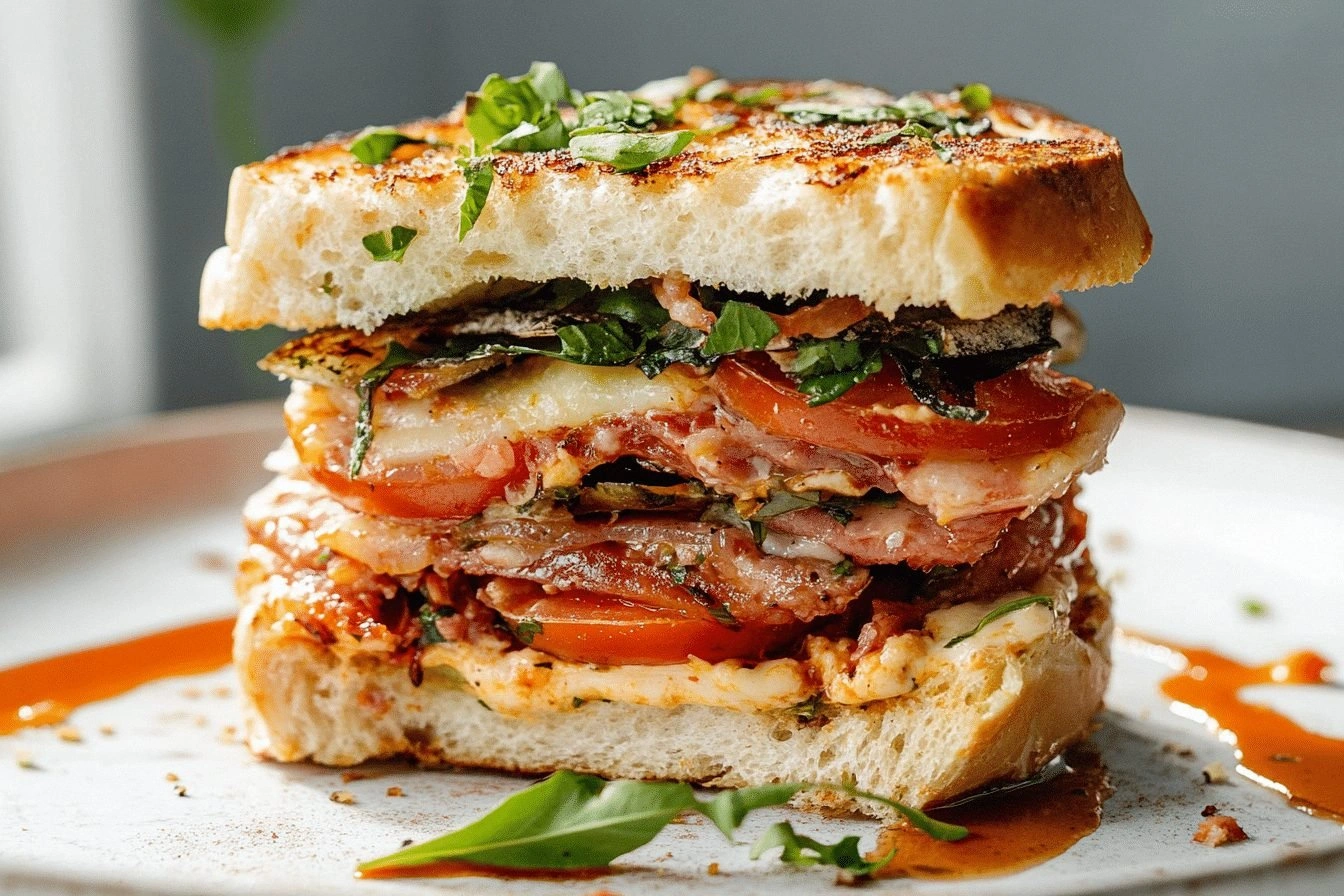
- Layer the cured meats in a deliberate order: start with salami, then ham, and finish with mortadella. This sequence allows the spicier salami to mingle with the sweeter ham before the mortadella’s subtle sweetness caps it off. Press the meats lightly to ensure they stay in place during cooking.
- Add slices of provolone and Swiss cheese on top of the meats. The cheeses should be thick enough to melt into a gooey layer but not so thin that they slide off. Cover the top with the remaining bread slice, pressing gently to seal the sandwich.
- Place the assembled sandwich onto the pre‑heated press or skillet. If using a skillet, cover it with a lid to trap heat and help the cheese melt. Cook for 3–4 minutes on each side, or until the bread is golden brown and the cheeses are bubbling. The sandwich should emit a toasty aroma that signals readiness.
- Watch Out: Be careful not to overcook the sandwich. If the cheese melts too quickly, the bread may burn before the fillings are fully heated. Keep an eye on the edges; they should pull away slightly when the sandwich is ready.
- Once cooked, remove the sandwich from heat and let it rest for 30 seconds. This brief pause allows the cheeses to set slightly, preventing a gooey mess when cutting.
- Slice the sandwich diagonally into bite‑size portions. The cut should expose the colorful layers of meats, cheese, and olive salad, making each piece a visual feast.
- Serve immediately with a side of tangy pickles or a crisp green salad to cut through the richness. If you’re preparing for a crowd, keep the sandwiches warm in a low oven (200°F) until ready to serve.
That’s it — you did it. But hold on, I’ve got a few more tricks that will take this to another level, turning a simple sandwich into a culinary masterpiece.
Insider Tricks for Flawless Results
The Temperature Rule Nobody Follows
Many people think any heat will do, but the key is medium‑heat. A pan that’s too hot will char the bread before the cheese melts; too cool, and the sandwich will be soggy. Aim for a steady 350°F, and keep the lid on to create a mini‑oven effect that melts the cheese evenly.
Why Your Nose Knows Best
When you smell the sandwich, it should announce a savory, smoky aroma with a hint of citrus from the olive salad. If the scent is flat or overly oily, the meats need more seasoning or the olive salad needs a bit more acidity. Trust your nose; it’s the ultimate judge of flavor balance.
The 5‑Minute Rest That Changes Everything
After cooking, let the sandwich rest for exactly 5 minutes. This allows the cheese to set into a cohesive layer and the juices to redistribute, preventing a greasy bite. I’ve seen sandwiches that were cut too quickly and ended up with cheese sliding off; the rest time is the secret to a clean, satisfying cut.
Layering Order Matters
Place the meats in the order of spiciness: salami first, then ham, then mortadella. This gradient ensures that each bite has a balanced flavor profile. If you switch the order, the spicier salami may overpower the milder meats, throwing off the harmony.
Cheese Selection Tips
Provolone and Swiss are the classic pair, but if you’re adventurous, try a blend of Gruyère and Asiago for a deeper nutty flavor. Keep the cheese slices thick enough to melt into a gooey blanket, but not so thick that they dominate the sandwich’s bite.
Finishing Touches
Just before serving, drizzle a splash of high‑quality extra‑virgin olive oil over the top. This adds a glossy finish and a subtle fruity note that elevates the entire experience. I’ve found that a light dusting of cracked black pepper also enhances the savory depth without overpowering the sandwich.
Creative Twists and Variations
This recipe is a playground. Here are some of my favorite ways to switch things up:
Vegetarian Muffuletta
Replace the cured meats with marinated grilled portobello mushrooms, roasted red peppers, and thinly sliced zucchini. Keep the olive salad and cheeses for the same savory depth. This version is hearty and still delivers the classic sandwich experience.
Spicy Jalapeño Muffuletta
Add slices of fresh jalapeño or a dash of chipotle mayo between the meats. The heat will contrast nicely with the creamy cheeses, creating a dynamic flavor profile that excites the palate.
Provençal Herb Muffuletta
Infuse the olive salad with fresh rosemary, thyme, and a splash of white wine vinegar. The herbal notes add a fragrant complexity that transports you to the French countryside.
Greek‑Inspired Muffuletta
Swap the mortadella for sliced feta cheese, and add a layer of sliced cucumber and tomato. The Mediterranean flavors create a fresh, summery take on the classic.
Breakfast Muffuletta
Use scrambled eggs and crispy bacon in place of some meats, and top with a drizzle of hollandaise. This breakfast twist turns the sandwich into a protein‑packed morning feast.
Gluten‑Free Muffuletta
Replace the traditional loaf with a gluten‑free sesame bread or a sturdy ciabatta made from a gluten‑free flour blend. The rest of the ingredients stay the same, ensuring a seamless transition.
Storing and Bringing It Back to Life
Fridge Storage
Wrap the assembled sandwich tightly in parchment paper, then place it in an airtight container. Store in the refrigerator for up to 2 days. When you’re ready to eat, simply reheat in a skillet or oven at 350°F for 5 minutes.
Freezer Friendly
For longer storage, wrap the sandwich in foil and freeze for up to 3 months. Thaw overnight in the refrigerator before reheating. A quick 5‑minute heat in the oven restores the crispness and melts the cheeses beautifully.
Best Reheating Method
Preheat your oven to 400°F. Place the sandwich on a baking sheet and bake for 8–10 minutes, or until the bread is toasted and the cheese is bubbling. Add a splash of water to the bottom of the pan to create steam, which keeps the sandwich moist without making it soggy.