When I first tried to whip up a quick weeknight dinner, I almost turned my kitchen into a disaster zone. I had a bag of chicken, a can of cream, and a bag of orzo that had been sitting in the pantry for months, and I thought, “Why not combine them?” The moment I tossed the chicken into the pan, the aroma of sizzling olive oil and peppered chicken filled the air, and I realized I had stumbled upon a culinary goldmine. I was standing in my kitchen, the clock ticking, and the smell of garlic and bell pepper dancing in the air—my stomach was practically shouting, “This is going to be amazing.”
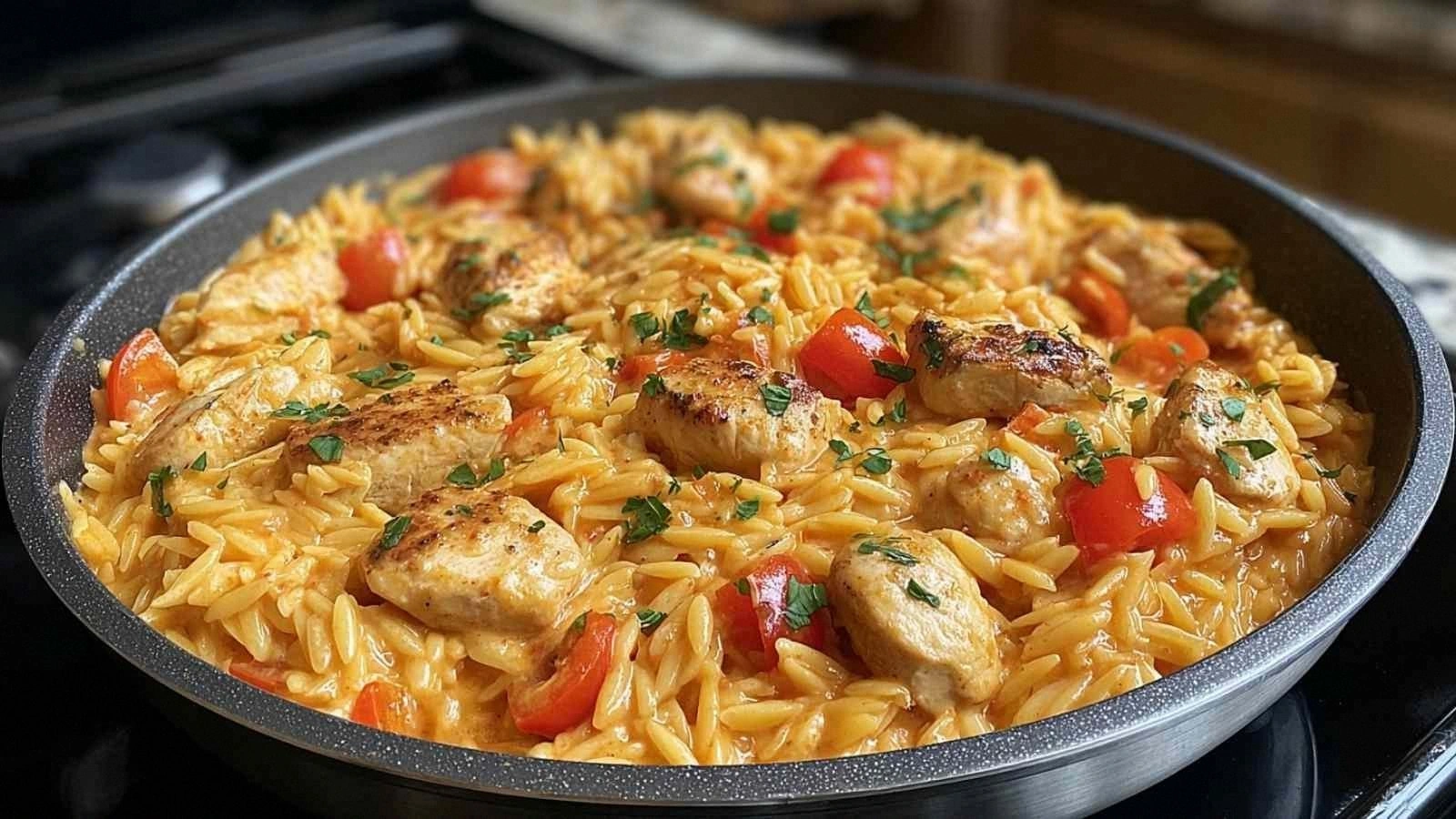
Picture this: a single pot, a handful of ingredients, and a sauce that coats each grain of orzo like velvet. The chicken, seared to a perfect golden brown, releases juices that mingle with the onions and garlic, forming a savory base. The red bell pepper adds a pop of color and a subtle sweetness that cuts through the richness of the cream. Every bite is a harmonious blend of smoky Cajun seasoning, subtle smoked paprika, and the sharp bite of Parmesan. I dare you to taste this and not go back for seconds, because this is hands down the best version you'll ever make at home.
What makes this version stand out is the balance of heat and creaminess that feels like a comforting hug on a cold night. The orzo stays al dente, absorbing the sauce without becoming mushy—a rare feat in one-pot dishes. The recipe’s simplicity means you can throw it together in less than an hour, yet it feels like a gourmet creation. I’ll be honest—I ate half the batch before anyone else got a chance to try it, and the leftovers still taste as fresh as the first serving. If you've ever struggled with creamy pasta dishes that end up too thick or too watery, you're not alone—and I've got the fix.
There’s a secret ingredient that most recipes overlook: smoked paprika. It adds a subtle, earthy smokiness that elevates the dish without overpowering the Cajun heat. I discovered this trick after a friend's suggestion that the sauce could use more depth, and it instantly transformed the flavor profile. The next time you cook this dish, keep a bottle of smoked paprika on hand; it’s the little touch that sets this recipe apart. Stay with me here—this is worth it.
Okay, ready for the game-changer? Let me walk you through every single step—by the end, you'll wonder how you ever made it any other way. The method is straightforward, but each step is carefully orchestrated to build layers of flavor that crescendo into a creamy, savory masterpiece. The next part? Pure magic. And now the fun part: we’ll explore the ingredients that make this dish sing, the techniques that keep the sauce silky, and the twists that let you customize it for every occasion.
What Makes This Version Stand Out
- Flavor: The combination of Cajun seasoning, smoked paprika, and Parmesan creates a complex, smoky-sweet profile that feels both comforting and adventurous. The peppery heat is balanced by the cream’s richness, making each bite a dance of textures and tastes.
- Texture: The orzo remains al dente, providing a pleasant bite that contrasts with the silky sauce. The seared chicken adds a satisfying chew, while the sautéed vegetables soften just enough to release their natural sugars.
- Ease: With a single pot and a handful of pantry staples, you can have a gourmet dinner on the table in under 45 minutes. No need for multiple pans or complicated prep work—just gather, sauté, simmer, and serve.
- Versatility: Swap the orzo for pasta of your choice, or replace chicken with shrimp or tofu for a pescatarian or vegetarian version. The sauce adapts beautifully, allowing you to tailor it to your dietary preferences.
- Crowd-pleaser: This dish is a crowd-pleaser at potlucks, family dinners, or a cozy night in. The bold flavors and creamy texture satisfy both kids and adults alike.
- Ingredient Quality: Fresh, high‑quality ingredients make the difference. Choose boneless, skinless chicken breasts that cook evenly, and opt for fresh parsley for a burst of color and flavor.
- One‑Pot Simplicity: The method eliminates cleanup, letting you focus on the cooking process and enjoy the meal without the hassle of washing multiple dishes.
- Make‑Ahead Potential: This dish can be prepared ahead of time and reheated without losing its creamy charm. Store it in an airtight container and reheat gently to keep the sauce silky.
Inside the Ingredient List
The Flavor Base
Olive oil, onion, and garlic form the aromatic foundation. The oil carries the heat of the Cajun seasoning, while the garlic adds depth and a touch of sweetness. If you skip the onion, the dish loses its mellow sweetness, and the sauce might taste too sharp. For a richer flavor, use extra‑virgin olive oil; it brings a fruity note that complements the creamy sauce.
The Texture Crew
Orzo pasta is the star of the show, providing a chewy bite that holds the sauce beautifully. The chicken breasts, when seared properly, develop a golden crust that adds a subtle crunch. If you use pre‑cooked chicken, the texture will be softer, and the flavor profile will shift toward a more uniform bite.
The Unexpected Star
Smoked paprika is the secret sauce that sets this dish apart. It adds a smoky undertone that deepens the overall flavor without overpowering the Cajun heat. If you don’t have smoked paprika, regular paprika can be used, but the dish will lose that subtle smokiness.
The Final Flourish
Fresh parsley brightens the finished dish with a burst of color and a clean, herbaceous finish. Parmesan cheese melts into the sauce, thickening it while adding a nutty, salty kick. If you prefer a dairy‑free version, try nutritional yeast for a cheesy flavor without the cream.
Everything's prepped? Good. Let's get into the real action.
The Method — Step by Step
- Heat the olive oil in a large skillet or Dutch oven over medium heat until shimmering. Add the diced onion and sauté until translucent, about 3–4 minutes, letting the sugars caramelize. The aroma should be sweet and fragrant, a promise of the flavor to come. Keep the heat steady; you don't want the onions to brown too quickly.
- Add the minced garlic and cook for 30 seconds until fragrant. Be careful not to burn the garlic; it should just release its aroma. This step is crucial because burnt garlic can ruin the entire sauce. A quick stir ensures even distribution.
- Season the chicken breasts with Cajun seasoning, smoked paprika, salt, and black pepper. Lay the chicken in the pan, skin side down if it has skin, and sear for 3–4 minutes on each side until golden brown. The seared surface will lock in juices and provide a flavorful crust. Flip carefully to avoid tearing the meat.
- Remove the chicken and set aside. In the same pan, add the diced red bell pepper and cook for 2 minutes until slightly softened. The pepper adds a pop of color and a subtle sweetness that balances the heat. Keep it moving so it doesn't burn.
- Pour in the chicken broth and bring to a simmer, scraping up any browned bits from the pan. These bits are packed with flavor and help deepen the sauce. Let the broth reduce slightly for 3 minutes to concentrate the taste.
- Stir in the orzo pasta and return the chicken to the pan. Cover and let it simmer for 8–10 minutes, or until the orzo is al dente and the liquid is absorbed. Stir occasionally to prevent sticking. The orzo should be tender but still firm to the bite.
- Reduce the heat to low and pour in the heavy cream. Stir gently until the sauce thickens and coats the pasta. The cream should coat each grain of orzo like velvet, creating a silky mouthfeel. Keep the heat low to avoid curdling.
- Add the grated Parmesan cheese and stir until fully melted and incorporated. The cheese adds a nutty depth and helps thicken the sauce. Taste and adjust seasoning if needed; you might need a pinch more salt.
- Finish with fresh parsley, tossing it in for a burst of color and fresh herbaceous flavor. Serve immediately, spooning the creamy sauce over each portion of orzo. The dish is ready to be devoured.
That's it — you did it. But hold on, I've got a few more tricks that'll take this to another level.
Insider Tricks for Flawless Results
The Temperature Rule Nobody Follows
Cooking the orzo at a gentle simmer rather than a rolling boil keeps the grains from becoming mushy. I once boiled this dish and the pasta fell apart, ruining the sauce’s texture. By keeping the heat moderate, the orzo absorbs liquid evenly, maintaining a perfect al dente bite. A low simmer also allows the flavors to meld without losing their intensity.
Why Your Nose Knows Best
As the sauce simmers, your nose will start to detect subtle hints of smoke from the paprika and the umami from the Parmesan. Trust that scent—it signals the sauce is ready. I’ve found that when the aroma is rich and slightly sweet, the dish is at its peak flavor.
The 5‑Minute Rest That Changes Everything
Letting the dish rest for five minutes after you remove it from the heat allows the sauce to thicken and the flavors to settle. During this short pause, the orzo continues to absorb the creamy sauce, becoming even more luscious. This step might seem trivial, but it makes the difference between good and unforgettable.
Keep the Chicken Juicy
Seared chicken can dry out if you overcook it. I recommend removing the chicken just before the orzo is fully cooked; it will finish in the residual heat of the sauce. This method keeps the chicken tender and flavorful, ensuring every bite is juicy.
Use Fresh Herbs for a Color Pop
Fresh parsley adds a bright, green splash that elevates the dish visually and taste-wise. If you’re in a pinch, a handful of chopped basil or oregano can replace parsley, offering a different aromatic profile. The key is to add herbs at the end to preserve their freshness.
Make It Vegan with a Twist
Swap the chicken for sautéed mushrooms and replace the heavy cream with coconut milk. Add nutritional yeast for a cheesy flavor, and the dish becomes a plant‑based delight. The smoky heat still shines through, and the sauce remains creamy.
Creative Twists and Variations
This recipe is a playground. Here are some of my favorite ways to switch things up:
Spinach & Sun‑Dried Tomato
Stir in a handful of fresh spinach and chopped sun‑dried tomatoes in the last minute of cooking. The spinach wilts beautifully, adding earthiness, while the sun‑dried tomatoes bring a tangy sweetness. This variation is perfect for spring when spinach is at its freshest.
Cheesy Broccoli Alfredo
Replace the bell pepper with broccoli florets and add a splash of mozzarella during the final stir. The broccoli offers a mild crunch, and the mozzarella adds a gooey, cheesy texture that pairs wonderfully with the creamy sauce.
Spicy Shrimp Edition
Swap the chicken for shrimp, sautéing them in the same pan after the orzo is nearly done. Shrimp cooks quickly, adding a delicate seafood flavor that complements the Cajun heat. This version is ideal for a quick dinner when you crave something different.
Italian Herb Infusion
Replace the Cajun seasoning with Italian herbs such as oregano, thyme, and basil. The sauce becomes a classic Alfredo with a herbaceous twist. Serve with a side of garlic bread for a full Italian experience.
Low‑Calorie Lightened Version
Use low‑fat milk instead of heavy cream, and reduce the Parmesan to a tablespoon. The sauce becomes lighter while still creamy. This version is great for those watching their calorie intake without sacrificing flavor.
Gluten‑Free Pasta Swap
Use a gluten‑free orzo or rice pasta to accommodate dietary restrictions. The cooking time remains similar, and the sauce adheres just as well. This ensures everyone at the table can enjoy the dish.
Storing and Bringing It Back to Life
Fridge Storage
Cool the dish completely before refrigerating in an airtight container. It will keep for up to 3 days. When reheating, add a splash of milk or water to loosen the sauce, then warm gently on low heat, stirring until heated through. The sauce will regain its silky texture.
Freezer Friendly
Store in a freezer‑safe container for up to 2 months. Thaw overnight in the refrigerator before reheating. Use the same technique as for fridge storage, but add a bit more liquid to compensate for moisture loss during freezing.
Best Reheating Method
Reheat on the stovetop over low heat, adding a tablespoon of water or milk to keep the sauce from drying out. Stir frequently to ensure even heating. Once hot, serve immediately for the best texture.