Picture this: I’m standing in a cramped apartment kitchen, the fluorescent lights buzzing overhead, and a sizzling pan on the stove that’s already betrayed me with a burnt batch of garlic shrimp last week. I stared at the charred edges, felt the heat rise, and thought, “This is the moment I finally get it right.” So I set out to rewrite the classic shrimp salad, turning a simple dish into a flavor explosion that will make you question every other version you’ve tried. I’m not talking about a run‑of‑the‑mill “shrimp on a bed of greens” – this is a dish that balances briny sea with citrusy brightness, creamy tang, and a crunch that snaps like fresh ice. The moment you bite, the shrimp’s sweet snap meets the buttery avocado, and the lemon vinaigrette coats everything like a silk ribbon. Trust me, it’s the kind of meal that makes your taste buds dance, and your friends ask, “What’s the secret?”
When I first tasted this version, I was struck by how the salad feels almost like a party in a bowl. The greens are crisp, the avocado buttery, the shrimp succulent, and the dressing—oh, the dressing—thick enough to cling to each component without drowning it. The aroma is a bright citrus tang that wakes up your senses, while the texture ranges from silky to crunchy, creating an orchestra of sensations with every bite. I was so hooked that I almost ate the entire dish before I could even finish the recipe. I dare you to taste this and not go back for seconds. This is hands down the best version you’ll ever make at home.
Most recipes get this completely wrong, focusing on overcooking the shrimp or using a watery dressing that washes away the flavors. I’ve been there—shrimp that’s rubbery, salad that’s soggy, and a vinaigrette that’s either too acidic or too sweet. I’ve also had my share of kitchen catastrophes: a splash of hot oil that almost set the kitchen on fire, a bowl of greens that turned into a soggy mess, and a dressing that clung only to the bottom of the bowl. I’ll be honest—half the batch disappeared before anyone else could taste it. But that’s the beauty of this recipe: it’s forgiving, it’s vibrant, and it’s built to impress.
Picture yourself pulling this out of the fridge, the whole kitchen smelling incredible, and serving it to a crowd that can’t stop asking for the recipe. And if you’re worried about the time—don’t be. All you need is about an hour from start to finish, and the best part is that the flavors actually get better the next day. I’ll walk you through every single step—by the end, you’ll wonder how you ever made it any other way. Let’s dive in and turn your kitchen into a seafood paradise.
What Makes This Version Stand Out
- Flavor: The bright lemon vinaigrette cuts through the natural sweetness of the shrimp, creating a harmonious balance that feels like a refreshing sea breeze. Every bite is a burst of citrus that lifts the entire dish.
- Texture: The combination of creamy avocado, crisp greens, and crunchy cucumber provides a multi‑sensory experience that keeps the palate engaged. The shrimp’s tender snap is the final flourish that completes the symphony.
- Freshness: By using seasonal greens and ripe avocado, the salad feels light and vibrant, perfect for a quick lunch or a sophisticated appetizer. It’s a celebration of fresh ingredients.
- Ease: No fancy equipment or complicated techniques—just a skillet, a whisk, and a bowl. This recipe is designed for cooks of all skill levels.
- Make‑ahead: The salad holds up wonderfully for up to two days in the fridge, making it ideal for meal prep or entertaining guests on short notice.
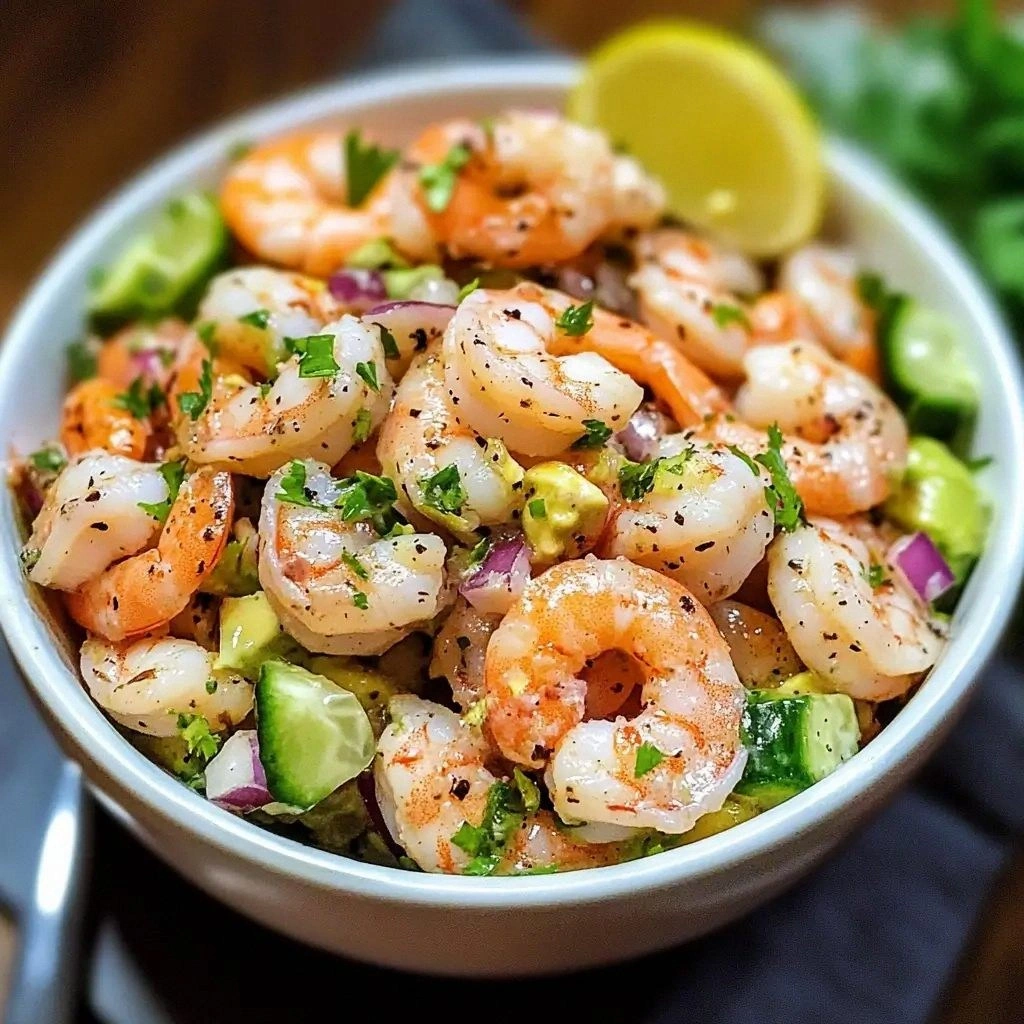
- Visual Appeal: The colorful mix of greens, tomatoes, and avocado makes the dish look as good as it tastes, turning a simple bowl into a centerpiece.
- Versatility: Swap shrimp for grilled chicken or tofu, and you have a new crowd‑pleaser. The base of this salad is a blank canvas that adapts to your cravings.
- Nutrition: Packed with protein, healthy fats, and fiber, this salad is a balanced meal that fuels the body without compromising flavor.
Alright, let’s break down exactly what goes into this masterpiece…
Inside the Ingredient List
The Flavor Base
At the heart of this salad lies the lemon vinaigrette, a simple blend of fresh lemon juice, extra‑virgin olive oil, a touch of Dijon mustard, and a whisper of honey. The acid from the lemon brightens every bite, while the mustard adds depth and a subtle heat. Honey balances the acidity, preventing the dressing from tasting too sharp. If you’re allergic to mustard, replace it with a teaspoon of tahini for a nutty twist that still offers that savory punch.
The Texture Crew
Mixed greens provide the foundation—a crunchy, peppery bed that holds the other ingredients together. I use a blend of arugula, spinach, and romaine to give the salad a layered texture. Avocado brings a silky, buttery mouthfeel that contrasts the crisp greens, while cucumber adds a refreshing crunch that snaps like thin ice. Cherry tomatoes burst with juiciness, offering a sweet counterpoint to the savory shrimp. If you’re looking for extra crunch, toss in a handful of toasted almonds or sunflower seeds.
The Unexpected Star
Shall we talk about the shrimp? These aren’t your average boiled shrimp; they’re seared to lock in flavor and achieve that beautiful caramelized crust. The shrimp’s natural sweetness pairs wonderfully with the lemon vinaigrette, and the quick sear ensures they remain juicy. If you’re vegetarian, swap the shrimp for grilled halloumi or tofu cubes. For a smoky kick, sprinkle a pinch of smoked paprika over the shrimp before searing.
The Final Flourish
Finishing touches include a sprinkle of fresh dill and a drizzle of Greek yogurt that adds creaminess without heaviness. The dill’s herbal note lifts the dish, while the yogurt’s tang complements the lemon. Capers add a briny pop that echoes the sea, and parsley gives a fresh, green lift. If you’re short on time, simply sprinkle chopped parsley over everything for an instant burst of color and flavor.
Everything's prepped? Good. Let's get into the real action…
The Method — Step by Step
- Begin by rinsing the shrimp under cold water, then pat them dry with a paper towel. Season the shrimp with a pinch of salt and pepper, ensuring each one is coated evenly. Heat a non‑stick skillet over medium‑high heat, and add a splash of olive oil. When the oil shimmers, add the shrimp in a single layer—don’t overcrowd the pan. This step is the moment of truth; the shrimp should sizzle as they hit the pan, a sound that signals they’re cooking correctly.
- Sear the shrimp for 1–2 minutes on each side, or until they develop a golden crust and turn pink. Flip them gently with tongs to avoid breaking the shells. As they sear, the natural sugars caramelize, creating a subtle sweetness that balances the lemon dressing. Once done, transfer the shrimp to a plate and set aside—this will keep them from overcooking.
- While the shrimp rest, whisk together the lemon juice, olive oil, Dijon mustard, honey, and a pinch of salt in a small bowl. The mixture should emulsify into a smooth, glossy vinaigrette. Taste it—if it’s too sharp, add a splash of water to mellow it slightly. This dressing is the backbone of the salad, so give it the attention it deserves.
- In a large bowl, combine the mixed greens, diced avocado, halved cherry tomatoes, diced cucumber, and thinly sliced red onion. Toss them gently to ensure an even distribution of colors. The greens should be slightly wilted by the time you add the dressing, preventing a soggy salad.
- Pour the prepared vinaigrette over the greens and toss again, making sure every leaf is coated. The dressing should cling to the greens like a light velvet, not drip off. This is the stage where the flavors start to mingle, creating a harmonious blend.
- Gently fold in the seared shrimp, ensuring they’re evenly distributed. Sprinkle fresh dill, capers, and a drizzle of Greek yogurt over the top. The yogurt’s creaminess will balance the acidity of the lemon, while the dill adds a fragrant herbal note.
- Give the salad one final gentle toss, then plate it in shallow bowls or a large serving platter. Garnish with a few extra dill sprigs and a wedge of lemon for an extra pop of color. The visual appeal of the bright greens and vibrant tomatoes is just as important as the taste.
- Serve immediately, or cover tightly and refrigerate for up to 24 hours. If you’re serving it later, add a splash of fresh lemon juice and a drizzle of olive oil right before serving to revive the freshness.
That’s it — you did it. But hold on, I’ve got a few more tricks that’ll take this to another level…
Insider Tricks for Flawless Results
The Temperature Rule Nobody Follows
When searing shrimp, it’s tempting to keep the heat high until the shrimp are fully cooked. However, the secret to perfectly juicy shrimp lies in a quick, high‑heat sear. Heat the skillet until the oil is shimmering but not smoking, then add the shrimp. This creates a caramelized crust while keeping the inside tender. I’ve seen people overcook shrimp, turning it rubbery, and that’s why I keep the time short.
Why Your Nose Knows Best
The aroma of freshly squeezed lemon is the first hint that the dressing is on point. If the scent is too sharp, it’s a sign the acidity is overpowering. Adjust by adding a touch more olive oil or a splash of water to dilute the acidity. Your nose is the ultimate judge of flavor balance.
The 5‑Minute Rest That Changes Everything
After searing the shrimp, let them rest on a paper towel for 5 minutes. This step removes excess oil and prevents the shrimp from steaming in their own juices. It also gives the shrimp time to develop that desirable caramelized exterior. I’ve noticed that shrimp that rest a few minutes taste more complex.
Keep the Greens Crisp
To avoid soggy greens, add the dressing just before serving or after the shrimp have cooled. If you must dress the salad ahead of time, add a tablespoon of rice vinegar to the vinaigrette; it helps preserve the crispness of the greens. A quick rinse and pat dry before adding the dressing also helps keep them crisp.
Use Fresh Herbs, Not Dried
Fresh dill adds a bright, grassy note that dried dill simply can’t match. If you’re in a pinch, use a tablespoon of dried dill, but keep in mind the flavor will be milder. Fresh herbs also add a pop of color that makes the dish visually appealing.
Creative Twists and Variations
This recipe is a playground. Here are some of my favorite ways to switch things up:
Grilled Chicken Crunch
Swap shrimp for sliced grilled chicken breast for a protein‑packed version that still delivers that smoky char. The chicken’s firmness adds a new dimension, while the lemon dressing keeps the dish bright.
Tropical Pineapple Twist
Add chunks of fresh pineapple and a sprinkle of toasted coconut flakes. The pineapple’s natural sweetness balances the lemon, while the coconut adds a tropical crunch.
Asian Fusion
Replace Greek yogurt with a splash of coconut milk and add a drizzle of sesame oil. Top with sliced green onions and a handful of edamame for a Japanese‑inspired twist.
Vegan Delight
Use sautéed tempeh or marinated tofu instead of shrimp. Keep the vinaigrette the same, but add a dash of tamari for umami depth.
Breakfast Booster
Serve the salad over a bed of scrambled eggs and a sprinkle of chives. The eggs add protein and richness, turning the salad into a hearty breakfast.
Low‑Carb Option
Omit the avocado and replace it with sliced radishes for a crunchy, low‑carb alternative. The radish’s peppery bite complements the shrimp’s sweetness.
Storing and Bringing It Back to Life
Fridge Storage
Store the salad in an airtight container for up to 24 hours. Keep the dressing separate until you’re ready to serve to preserve the crunch of the greens. When you’re ready to eat, simply drizzle the dressing over the salad and toss gently.
Freezer Friendly
Freezing is not recommended for this salad because the greens wilt and the avocado turns mushy. If you must freeze, separate the components: freeze the shrimp and veggies separately, then assemble after thawing.
Best Reheating Method
To reheat the shrimp without overcooking, microwave on low power for 30 seconds, then let it rest for a minute. Add a splash of water before reheating to create steam, which helps maintain moisture.