Love this? Pin it for later! 📌
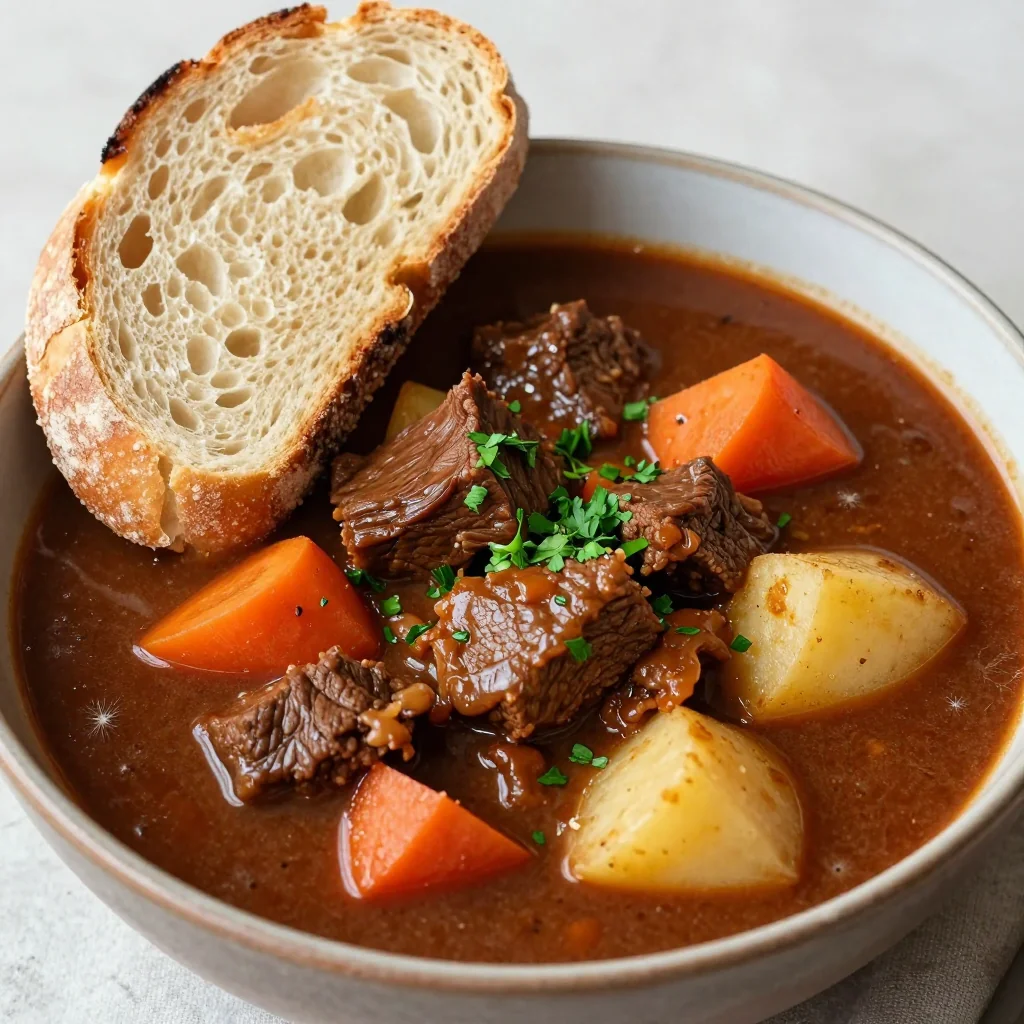
My first brisket was a disaster. I served what resembled shoe leather to my in-laws on Easter Sunday—an afternoon that lives in family lore. Fast-forward a decade, and this slow-roasted brisket with root vegetables and red-wine sauce is the meal my crew begs for the minute the temperature dips below 60 °F. The secret is patience: a leisurely overnight dry-rub, a long, low roast that coaxes collagen into buttery gelatin, and a final bath in syrupy red-wine jus that makes every slice taste like Sunday supper at a French country inn.
I love that this recipe feels fancy enough for holiday tables (hello, Christmas, Hanukkah, New Year’s) yet demands almost no hands-on time. You season the brisket the night before, nestle it the next morning with carrots, parsnips, and baby potatoes, then let the oven do the heavy lifting while you binge-watch period dramas. When guests arrive, the house smells like you’ve been slaving since dawn, but your only job is to reduce the pan juices into a glossy crimson sauce. Leftovers? Even better. Slice them for sandwiches, shred them for tacos, or freeze the meat in meal-size pouches and feel like a dinnertime superhero all winter long.
Why This Recipe Works
- Overnight dry-brine: Kosher salt, dark brown sugar, and espresso powder penetrate deep into the meat, seasoning every bite and jump-starting a mahogany bark.
- Low & slow 275 °F oven: Collagen melts into silk, turning the brisket spoon-tender while keeping slices intact for photo-worthy plating.
- Foil-covered first phase: Traps steam so the meat never dries out; uncovering later creates crave-worthy caramelized edges.
- One-pan root veg: Carrots, parsnips, and baby potatoes roast underneath, basting in beefy drippings and saving dish duty.
- Red-wine pan sauce: Deglazing with a bold Cabernet concentrates 12 hours of roasted flavor into a restaurant-worthy glaze.
- Make-ahead friendly: Tastes even better the next day; refrigerate whole or sliced in braising liquid for stress-free entertaining.
Ingredients You'll Need

A great brisket starts at the butcher counter. Look for the flat half (often labeled “first cut”) that’s even in thickness with a thin, translucent fat cap. If you’re feeding a crowd, buy the whole packer (10–12 lb) and split the flat for this recipe; save the point for burnt ends another weekend.
Beef brisket flat – 5 to 6 lb feeds 8–10 with leftovers. Trim fat to ¼-inch so seasonings penetrate but the meat stays juicy.
Kosher salt & dark brown sugar – The base of the dry brine. Sugar balances salt and encourages bark formation; swap coconut sugar for a refined-free version.
Espresso powder – Optional but magical; it deepens beefiness without tasting like coffee.
Smoked paprika, garlic powder, onion powder, black pepper – My signature rub quartet. Smoked paprika lends subtle campfire nuance even though we’re oven-roasting.
Olive oil – A light sheen helps the rub adhere and jump-starts browning.
Root vegetables – Carrots and parsnips become candy-sweet; baby Yukon Golds stay creamy inside while their skins crisp. Feel free to sub sweet potatoes or rutabaga.
Yellow onion & garlic – Aromatics that perfume the braising liquid.
Beef broth & bold red wine – Choose a dry Cabernet or Malbec you’d happily drink; cooking concentrates flaws. Low-sodium broth keeps the sauce from over-salting as it reduces.
Fresh thyme & bay leaves – Woodsy notes that whisper “slow Sunday.”
Butter & flour – A quick beurre manié thickens the sauce to spoon-coating perfection.
How to Make Slow-Roasted Beef Brisket with Root Vegetables and Red-Wine Sauce
Prep & Dry-Brine
Pat brisket dry with paper towels. Combine 2 Tbsp kosher salt, 2 Tbsp dark brown sugar, 1 Tbsp smoked paprika, 1 Tbsp black pepper, 1 tsp espresso powder, 1 tsp garlic powder, and 1 tsp onion powder. Rub mixture generously over all sides of the meat, pressing so it adheres. Place brisket fat-side-up on a rimmed sheet, cover loosely with plastic, and refrigerate 12–24 h. The salt initially draws moisture out, then the meat reabsorbs flavored brine, seasoning it through and through.
Bring to Room Temp
Remove brisket from fridge 1 h before roasting. Cold meat cooks unevenly, and you want the interior to hit 200 °F right as the exterior turns mahogany.
Sear for Flavor
Heat 2 Tbsp olive oil in a heavy roasting pan or Dutch oven over medium-high. Sear brisket fat-side-down 4 min until chestnut brown; flip and repeat. Browning triggers the Maillard reaction, gifting 800+ flavor compounds that water-based cooking can’t create.
Build the Bed of Veg
While brisket rests, toss 1 lb baby potatoes (halved), 4 carrots (cut into 2-inch batons), 2 parsnips (same), 1 quartered onion, and 4 smashed garlic cloves in the rendered fat. Season with salt and pepper. These vegetables act as a natural roasting rack, elevating the brisket so air circulates while soaking up beefy juices.
Add Liquid & Herbs
Nestle brisket fat-side-up on top of veg. Pour in 2 cups beef broth and 2 cups red wine until liquid comes halfway up the meat (add more broth if needed). Tuck 4 thyme sprigs and 2 bay leaves around the edges. Cover tightly with a double layer of foil or a heavy lid; you want steam trapped, not escaping.
Low & Slow Roast
Slide into a preheated 275 °F oven. Roast 5 h undisturbed. Resist peeking; every foil lift drops the temp and adds 15 min to cook time.
Uncover & Crank
Remove foil, increase oven to 325 °F, roast 30–40 min more. This step caramelizes the fat cap and reduces the braising liquid by roughly one-third.
Check for Doneness
Insert a probe thermometer into the thickest part; you’re aiming for 200–203 °F. Another test: slide a fork in and twist—if it turns with slight resistance but shredds easily, you’re gold. Undercooked brisket is chewy; overcooked becomes pot-roast crumbly.
Rest & Hold
Transfer brisket to a board, tent loosely with foil, rest 30 min (up to 2 h if kept warm in a 170 °F oven). Resting allows juices to redistribute, so slices stay moist.
Make the Red-Wine Sauce
Skim excess fat from pan. Bring liquid to a gentle boil on the stovetop; reduce by half, 8–10 min. Mash together 1 Tbsp softened butter and 1 Tbsp flour, whisk into sauce until it coats a spoon. Season with salt, pepper, and a splash of balsamic for brightness.
Slice Against the Grain
Identify the direction of the muscle fibers, then cut perpendicular in ¼-inch slices for melt-in-mouth tenderness. Serve atop roasted veg with a ladle of glossy sauce and a sprinkle of fresh thyme leaves.
Expert Tips
Overnight = Insurance
Dry-brining overnight is non-negotiable. It seasons the interior, dries the surface for better bark, and buys you flexibility on roast day.
Trust the Temp, Not the Clock
Briskets are rebels—some stall for 2 h at 160 °F. Use a probe thermometer and relax with a novel; time is a suggestion.
Fat-Side-Up Always
As the fat renders, it bastes the meat and prevents the lean flat from drying out. Flip only for the sear step.
Save the Fat
Chill pan juices; scrape the white fat layer into a jar. Beef tango is liquid gold for roasting potatoes or searing greens.
Slice Cold for Sandwiches
Chill leftover brisket overnight; it firms up for paper-thin deli slices that stack beautifully on rye with mustard.
Freeze in Gravy
Freeze sliced brisket submerged in sauce to prevent freezer burn. Thaw overnight, reheat gently at 300 °F 20 min.
Variations to Try
- Chile-Coffee Rub: Swap smoked paprika for ancho chile powder and add ½ tsp cayenne for a subtle kick.
- Stout instead of wine: Use a chocolate stout for deeper malt notes; reduce sauce slightly longer.
- Asian twist: Sub ⅓ cup soy sauce for part of the broth, add star anise, and finish sauce with a drizzle of sesame oil.
- Spring veg: Replace root veg with fennel wedges and pearl onions; add asparagus tips in the final 15 min.
- Smoker finish: After foil phase, transfer brisket to a 225 °F smoker for 1 h with cherry wood for authentic BBQ notes.
Storage Tips
Refrigerate: Cool brisket in cooking liquid, transfer to airtight container, refrigerate up to 4 days. The liquid acts as a protective barrier against drying.
Freeze: Slice brisket, lay flat in gallon freezer bags, ladle sauce to cover, squeeze out air, freeze up to 3 months. Vacuum-sealed portions keep 6 months.
Reheat: Thaw overnight in fridge. Warm covered at 300 °F with a splash of broth until center reaches 165 °F. Microwave works in a pinch—use 50 % power and cover with a damp paper towel.
Make-Ahead: Roast the brisket entirely on Saturday, chill overnight, scrape fat, reheat Sunday while you prep sides. Flavors marry and slicing is neater when cold.
Frequently Asked Questions

Slow-Roasted Beef Brisket with Root Vegetables and Red-Wine Sauce
Ingredients
Instructions
- Mix the rub: Combine salt, brown sugar, paprika, pepper, espresso powder, garlic powder, and onion powder. Rub all over brisket; refrigerate overnight.
- Sear: Let brisket stand 1 h. Heat olive oil in roasting pan; sear brisket 4 min per side until browned. Remove.
- Prep veg: Toss potatoes, carrots, parsnips, onion, and garlic in rendered fat; season with salt and pepper.
- Add liquid: Nestle brisket fat-side-up on veg. Pour in broth and wine; add thyme and bay. Cover tightly with foil.
- Roast: Bake at 275 °F 5 h, then uncover and bake 30–40 min more until brisket reaches 200–203 °F.
- Rest & sauce: Rest brisket 30 min. Skim fat from pan, boil juices 8 min, whisk in butter-flour paste to thicken. Serve brisket sliced with veg and sauce.
Recipe Notes
Brisket tastes even better the next day. Store sliced in sauce up to 4 days refrigerated or 3 months frozen.