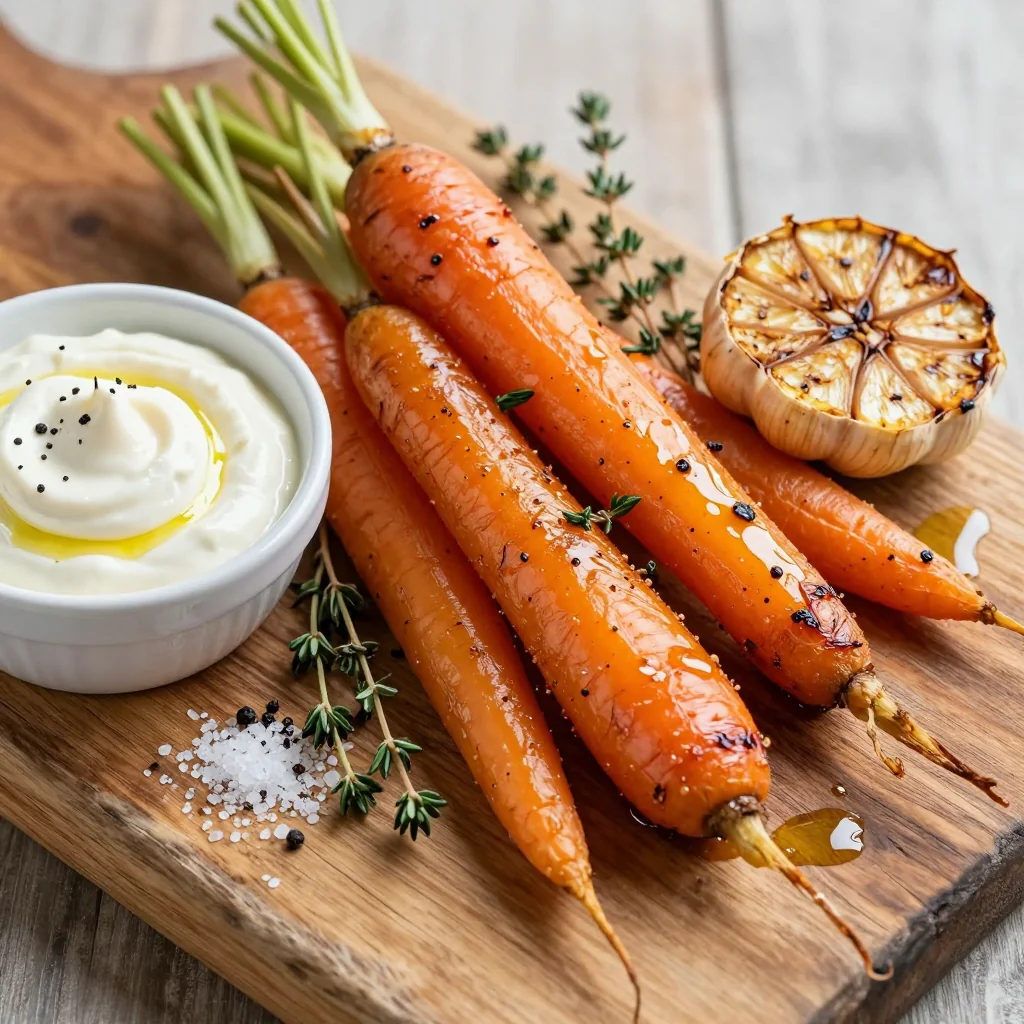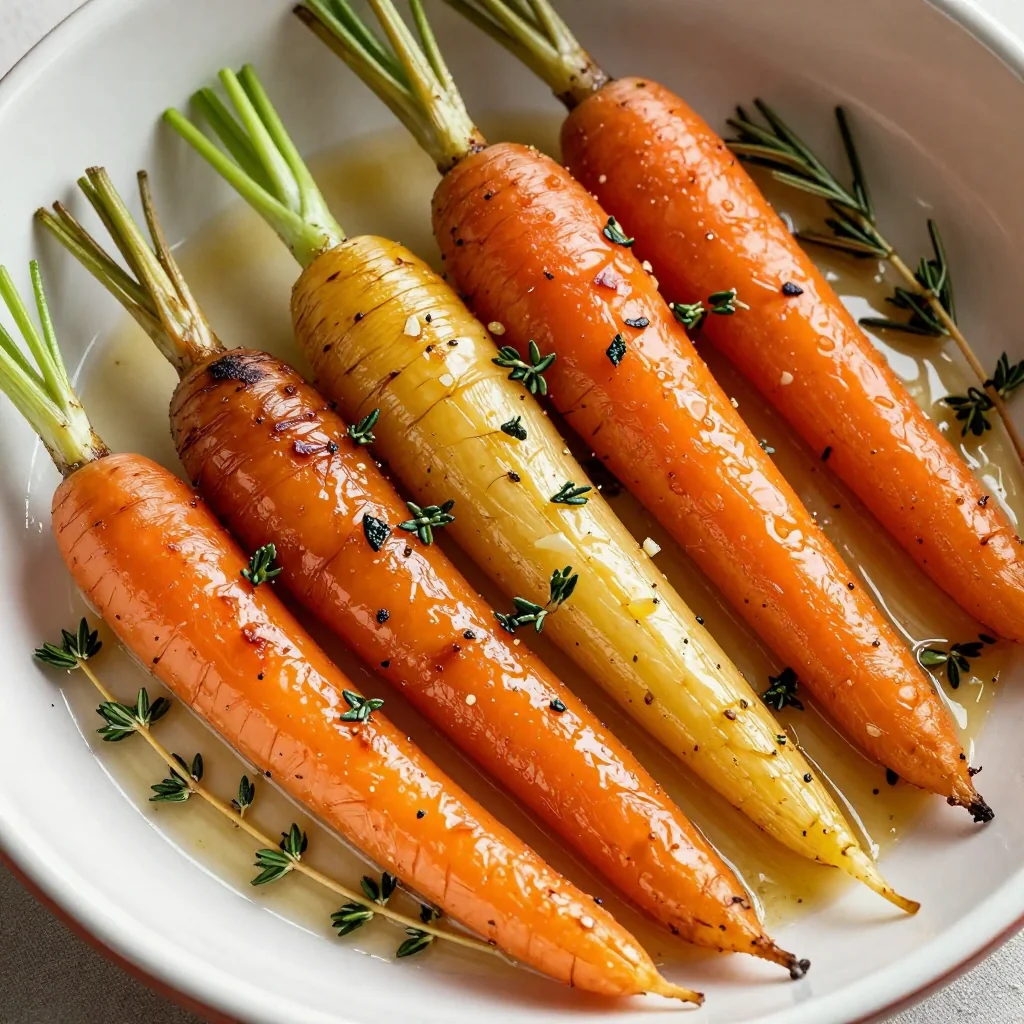
Love this? Pin it for later! 📌
Since that happy accident, this dish has become my go-to for everything from cozy date nights to festive holiday tables. The secret lies in the high-heat roasting method that concentrates the vegetables' natural sugars, while a final toss with fresh lemon, garlic, and herbs awakens every layer of flavor. Serve it over creamy polenta for a rustic Italian-inspired meal, or alongside crusty sourdough for a lighter supper that feels both nourishing and indulgent.
Why This Recipe Works
- High-Heat Magic: Roasting at 425°F creates deep caramelization without drying out the vegetables
- Lemon Two Ways: Zest before roasting for brightness, juice after for fresh pop
- Garlic Timing: Adding minced garlic halfway prevents burning while infusing maximum flavor
- Herb Strategy: Hardy herbs roast with vegetables, delicate ones finish fresh
- Size Matters: Cutting vegetables into similar-sized batons ensures even cooking
- Main-Dish Hearty: Protein-rich chickpeas and nuts transform sides into a satisfying meal
Ingredients You'll Need
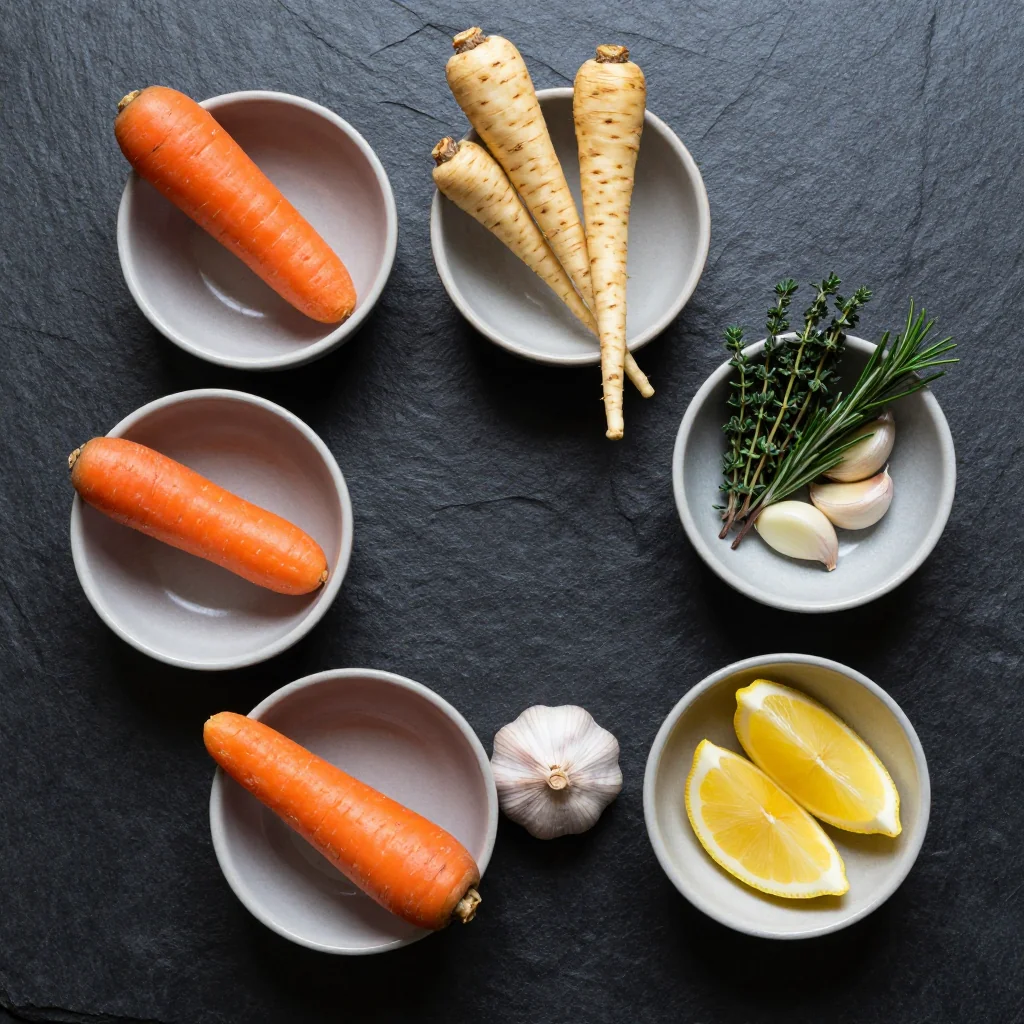
The beauty of this recipe lies in its simplicity, but each ingredient plays a crucial role in building layers of flavor. Let's talk about what to look for when shopping and how to substitute if needed.
Carrots: Seek out medium-sized carrots with smooth skin and vibrant color. Avoid those with green "shoulders" or soft spots. If you can find rainbow carrots at your farmers' market, they make for a stunning presentation, but regular orange carrots work beautifully. The key is uniformity in size so they roast evenly.
Parsnips: Choose firm, pale roots without soft spots or sprouting. Smaller parsnips tend to be sweeter and less fibrous than their larger counterparts. If your parsnips have thick cores (common in larger ones), cut them out as they can be woody.
Lemon: An unwaxed, organic lemon is ideal since we're using both zest and juice. Before zesting, give it a good scrub under warm water. The zest provides essential oils that bloom beautifully in the oven's heat, while the juice added at the end brightens everything.
Garlic: Fresh garlic makes all the difference here. Look for plump, firm heads with tight skin. Avoid any with green shoots, which indicate age and can taste bitter.
Fresh Herbs: I use a combination of woody herbs (rosemary and thyme) that can stand up to high heat, plus delicate parsley for freshness at the end. If fresh rosemary isn't available, use 1 teaspoon dried, but fresh thyme is worth seeking out.
Olive Oil: Use a good quality extra-virgin oil for the best flavor. The vegetables will absorb some of the oil's characteristics, so this isn't the place for the cheapest bottle.
Chickpeas: One can of chickpeas transforms this from a side dish into a protein-rich main. Look for BPA-free cans, or cook dried chickpeas ahead of time for even better texture.
How to Make Warm Lemon Roasted Carrots and Parsnips with Garlic and Herbs
Prep and Heat
Position a rack in the middle of your oven and preheat to 425°F (220°C). This high temperature is crucial for caramelization. Line a large rimmed baking sheet with parchment paper or a silicone mat for easy cleanup. If your baking sheet is small, use two - overcrowding will steam rather than roast the vegetables.
Prep the Vegetables
Peel the carrots and parsnips, then cut them on the bias into 2-inch pieces about ½-inch thick. Cutting on the bias increases surface area for better caramelization. If your parsnips are thick, cut them in half lengthwise first, then slice. Place the vegetables in a large bowl.
Season and Toss
Add 3 tablespoons olive oil, 1 teaspoon salt, ½ teaspoon black pepper, and the lemon zest to the bowl. Strip the leaves from 2 rosemary sprigs and 4 thyme sprigs, roughly chop them, and add to the bowl. Toss everything together with clean hands, making sure each piece is well coated. The oil helps the seasonings adhere and promotes browning.
First Roast
Spread the vegetables in a single layer on your prepared baking sheet. Make sure there's space between pieces - use two sheets if necessary. Roast for 20 minutes. During this time, the vegetables will start to soften and develop golden bottoms.
Add Chickpeas and Garlic
While the vegetables roast, drain and rinse one can of chickpeas. After 20 minutes, remove the pan and add the chickpeas and 3 minced garlic cloves. Use a spatula to toss everything together, redistributing the oil and seasonings. The chickpeas will absorb the flavors and crisp slightly.
Second Roast
Return the pan to the oven and roast for another 15-20 minutes, until the vegetables are tender and caramelized at the edges. The chickpeas should be golden and slightly crisp. If your vegetables aren't browning, move the pan to a higher rack or switch to convection if available.
Finish and Serve
Remove from oven and immediately drizzle with 2 tablespoons fresh lemon juice. Add ¼ cup chopped parsley and 2 tablespoons toasted pine nuts if desired. Toss everything together while still hot - the residual heat will slightly wilt the parsley and toast the nuts. Taste and adjust seasoning with more salt, pepper, or lemon juice as needed.
Serve and Enjoy
Serve hot or warm over creamy polenta, quinoa, or with crusty bread. Leftovers keep beautifully and can be reheated or served at room temperature over salads. For an extra indulgent touch, crumble some feta or goat cheese over the top just before serving.
Expert Tips
Temperature Matters
Don't be tempted to lower the oven temperature. The high heat is essential for caramelization. If your vegetables are browning too quickly, move them to a lower rack rather than reducing heat.
Oil Distribution
Use just enough oil to coat the vegetables - too much will make them soggy. Start with less and add more if needed. They should glisten but not be swimming in oil.
Don't Rush the Roast
Resist the urge to stir too frequently. Let the vegetables develop deep caramelization on the bottom before tossing. Once around the halfway mark is usually perfect.
Lemon Timing
Adding lemon juice at the end preserves its bright flavor. If added before roasting, it can make the vegetables tough and bitter due to the acids.
Pan Selection
Use a light-colored pan for even browning. Dark pans can cause the bottoms to burn before the vegetables are tender. A rimmed sheet is essential to contain the oil.
Season in Layers
Season the vegetables before roasting, then taste and adjust after cooking. The flavors concentrate during roasting, so you might need less final seasoning than you think.
Variations to Try
Winter Warmer
Add cubed butternut squash or sweet potato for extra sweetness. Toss in some dried cranberries during the last 5 minutes of roasting for a sweet-tart contrast.
Spicy Kick
Add ½ teaspoon smoked paprika and a pinch of cayenne to the oil mixture. Finish with a drizzle of harissa for North African-inspired heat.
Middle Eastern Twist
Replace lemon with orange zest and juice. Add 1 teaspoon ground cumin and coriander. Finish with tahini thinned with water and a sprinkle of za'atar.
Forest Blend
Add sliced fennel bulb and whole cremini mushrooms. Use fresh sage instead of rosemary. Finish with toasted hazelnuts and a splash of balsamic.
Storage Tips
Refrigeration
Store cooled leftovers in an airtight container in the refrigerator for up to 4 days. The flavors actually improve overnight as the herbs and garlic meld. For best texture, reheat in a 400°F oven for 10-12 minutes rather than microwaving, which can make the vegetables mushy.
Freezing
While the vegetables can be frozen for up to 2 months, the texture will change upon thawing. Freeze in single portions on a baking sheet first, then transfer to freezer bags. Thaw overnight in the refrigerator and reheat in the oven. The chickpeas freeze particularly well.
Make-Ahead
You can prep the vegetables up to 24 hours ahead - peel, cut, and store them submerged in cold water in the refrigerator. Pat very dry before roasting. Mix the seasoning blend up to a week ahead. The dish is excellent at room temperature for picnics or potlucks.
Frequently Asked Questions
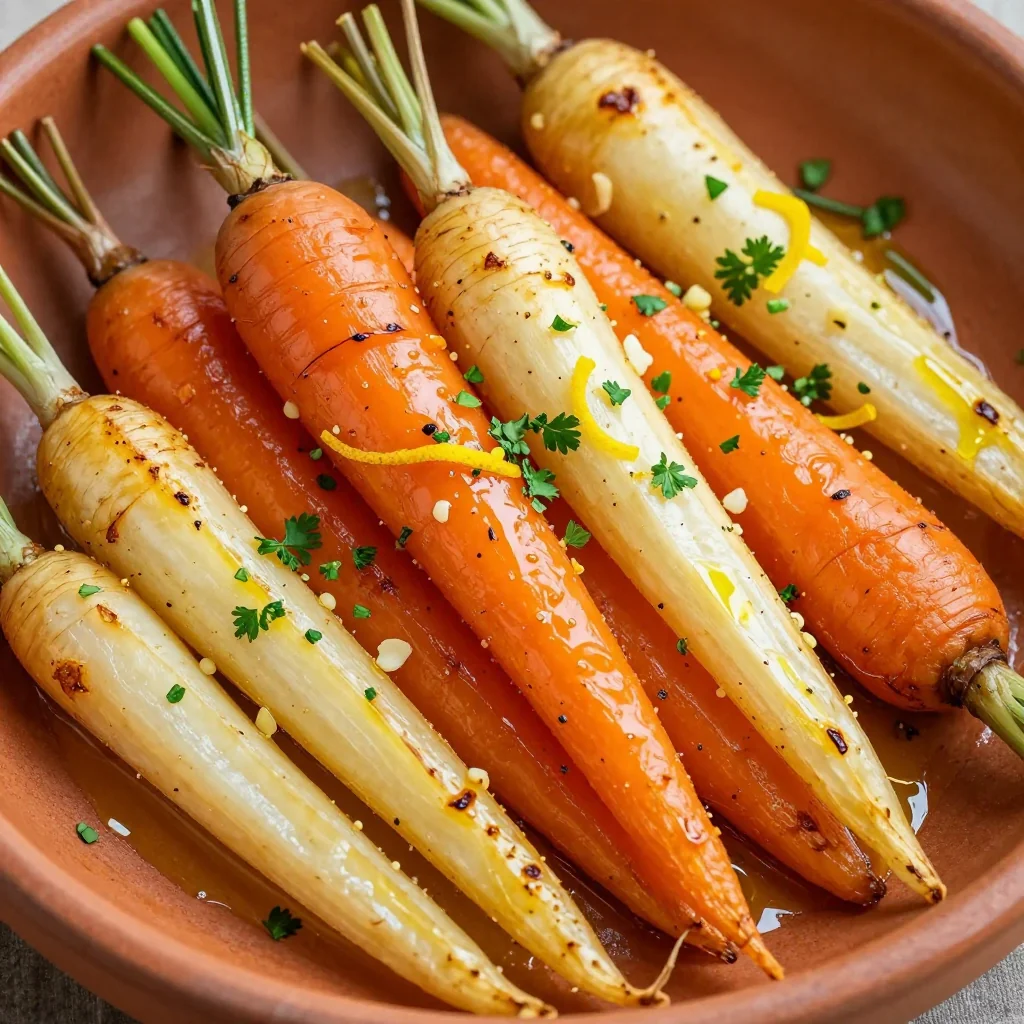
Warm Lemon Roasted Carrots and Parsnips with Garlic and Herbs
Ingredients
Instructions
- Preheat oven: Set to 425°F (220°C) and line a large baking sheet with parchment.
- Prep vegetables: Cut carrots and parsnips into 2-inch pieces on the bias.
- Season: Toss vegetables with oil, salt, pepper, lemon zest, and herbs.
- First roast: Spread on baking sheet and roast 20 minutes.
- Add chickpeas: Stir in chickpeas and garlic, roast 15-20 minutes more.
- Finish: Drizzle with lemon juice, add parsley and pine nuts, toss and serve.
Recipe Notes
For extra caramelization, broil for 2-3 minutes at the end, watching carefully to prevent burning. This dish is excellent served over creamy polenta or with crusty bread.